In the fast – paced world of modern industry, the efficiency of loading and unloading operations is a critical factor that significantly impacts overall productivity. As a supplier of loading and unloading robots, I am often asked the question: "How fast can a loading and unloading robot work?" This blog post aims to explore this question in depth, examining the factors that influence the speed of these robots and providing real – world examples to illustrate their capabilities. Loading and Unloading Robot
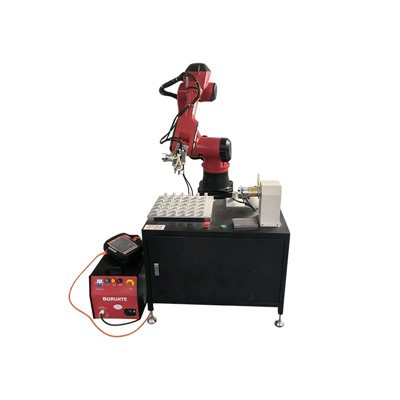
Factors Affecting the Speed of Loading and Unloading Robots
1. Robot Design and Configuration
The design of a loading and unloading robot plays a crucial role in determining its speed. Robots with a more streamlined design and a well – optimized kinematic structure can move more quickly and efficiently. For example, robots with fewer joints and a simpler mechanical structure generally have faster movement speeds. Additionally, the type of actuators used in the robot, such as high – torque motors and high – speed servo drives, can also have a significant impact on its speed.
The reach and payload capacity of the robot are also important considerations. A robot with a larger reach may take more time to move between different loading and unloading points, while a robot with a high payload capacity may need to move more slowly to ensure stability. Therefore, it is essential to choose a robot with the appropriate reach and payload capacity for the specific application.
2. Task Complexity
The complexity of the loading and unloading task can greatly affect the speed of the robot. Simple tasks, such as picking and placing a single item, can be completed much more quickly than complex tasks that involve sorting, stacking, or manipulating multiple items. For instance, if a robot is required to sort different types of products and stack them in a specific pattern, it will need to perform additional calculations and movements, which will slow down the overall process.
The size and shape of the objects being loaded and unloaded also play a role. Irregularly shaped or large objects may require more careful handling, which can reduce the robot’s speed. In contrast, small, uniform objects can be handled more quickly and efficiently.
3. Work Environment
The work environment in which the robot operates can have a significant impact on its speed. A clean, well – organized workspace with minimal obstacles allows the robot to move freely and quickly. On the other hand, a cluttered or hazardous environment can slow down the robot’s movement and increase the risk of collisions.
The layout of the loading and unloading area also matters. If the robot has to travel long distances between the loading and unloading points, it will take more time to complete the task. Therefore, optimizing the layout of the workspace can help improve the robot’s speed.
4. Programming and Control
The programming and control system of the robot is another important factor. A well – programmed robot can execute tasks more efficiently. Advanced programming techniques, such as path planning algorithms, can help the robot find the shortest and fastest path to complete the loading and unloading task.
The control system also needs to be responsive and accurate. A high – performance control system can ensure that the robot moves precisely and quickly, reducing the time required for each operation.
Real – World Examples of Loading and Unloading Robot Speeds
1. Warehouse Applications
In a typical warehouse setting, loading and unloading robots can achieve impressive speeds. For example, in a distribution center where small packages are being loaded onto trucks, a well – designed robot can pick up and place packages at a rate of up to 60 – 80 picks per minute. This high – speed operation is possible due to the relatively simple task of picking and placing small, uniform packages.
In some advanced warehouses, robots are used to handle palletized goods. These robots can move pallets in and out of storage racks at a speed of several meters per second. For instance, a robot with a high – speed linear actuator can move a pallet from a storage rack to a loading dock in just a few seconds.
2. Manufacturing Applications
In the manufacturing industry, loading and unloading robots are often used to transfer parts between different production stations. In a car manufacturing plant, for example, a robot can load engine components onto an assembly line at a rate of one component every few seconds. The speed of these robots is crucial for maintaining the high – volume production of cars.
In a precision manufacturing environment, such as the production of electronic components, robots need to handle small and delicate parts with high accuracy. Although the speed of these robots may be slightly lower compared to those in other applications, they can still complete loading and unloading tasks in a matter of seconds.
Maximizing the Speed of Loading and Unloading Robots
1. Regular Maintenance
Regular maintenance of the robot is essential to ensure its optimal performance. This includes checking and lubricating the mechanical components, inspecting the electrical systems, and updating the software. A well – maintained robot will operate more smoothly and quickly.
2. Continuous Training and Optimization
Providing training to the operators and programmers of the robot can help them make the most of its capabilities. By continuously optimizing the programming and control of the robot, it is possible to improve its speed and efficiency.
3. Integration with Other Systems
Integrating the loading and unloading robot with other systems, such as conveyor belts, automated storage systems, and inventory management systems, can further enhance its speed. For example, by synchronizing the movement of the robot with the conveyor belt, the overall loading and unloading process can be streamlined.
Conclusion
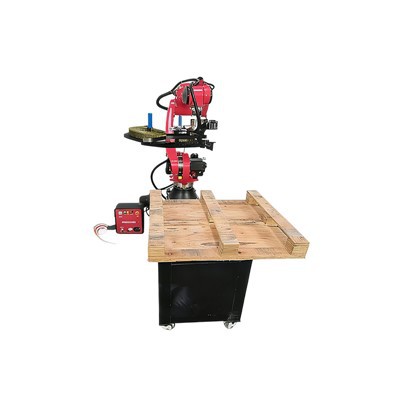
The speed of a loading and unloading robot depends on a variety of factors, including its design, the complexity of the task, the work environment, and the programming and control system. In real – world applications, these robots can achieve impressive speeds, ranging from dozens of picks per minute in a warehouse to rapid part transfers in a manufacturing plant.
Nail Gun Robot As a supplier of loading and unloading robots, we are committed to providing high – quality products that offer excellent speed and efficiency. Our robots are designed with the latest technology and optimized for various applications. If you are interested in improving the efficiency of your loading and unloading operations, we invite you to contact us for a detailed discussion. We can provide customized solutions based on your specific requirements and help you achieve significant productivity gains.
References
- Robotics Industry Association. (2023). Best Practices for Loading and Unloading Robots.
- Industrial Engineering Journal. (2022). Efficiency Analysis of Loading and Unloading Robots in Different Work Environments.
- Manufacturing Technology Review. (2021). High – Speed Loading and Unloading Solutions for Modern Factories.
Dongguan Chuanglida Intelligent Equipments Co., Ltd.
As one of the most professional loading and unloading robot manufacturers and suppliers in China, we also support customized service. Please feel free to buy discount loading and unloading robot in stock here from our factory. For price consultation, contact us.
Address: Room 201, Building 2, No. 61, Shachang 1st Road, Dalang Town, Dongguan City, Guangdong Province
E-mail: haoguangli001@outlook.com
WebSite: https://www.boruntestech.com/
