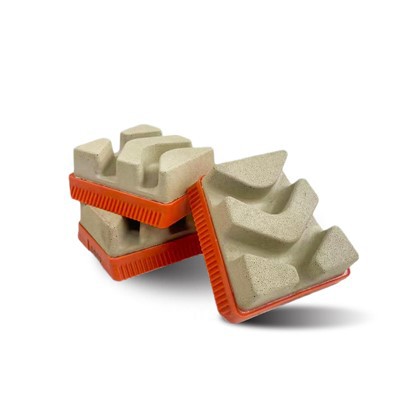
When it comes to the world of abrasives, one question that often arises is whether classical disc abrasives are suitable for wet grinding. As a supplier of classical disc abrasives, I’ve encountered this query numerous times from customers across various industries. In this blog, I’ll delve into the science behind wet grinding, the characteristics of classical disc abrasives, and evaluate their suitability for this specific grinding method. Classical Disc Abrasive
Understanding Wet Grinding
Wet grinding is a process where a liquid coolant or lubricant is applied to the grinding surface during the operation. This technique offers several advantages over dry grinding. Firstly, the coolant helps to dissipate heat generated during the grinding process. Excessive heat can cause the workpiece to warp, damage the abrasive, and reduce the overall quality of the finish. By keeping the temperature in check, wet grinding ensures a more stable and consistent grinding process.
Secondly, the liquid acts as a lubricant, reducing friction between the abrasive and the workpiece. This not only extends the life of the abrasive but also improves the surface finish of the workpiece. The lubricating effect helps to prevent the formation of rough edges and burrs, resulting in a smoother and more precise finish.
Another benefit of wet grinding is the removal of debris. The coolant flushes away the grinding chips and particles, preventing them from clogging the abrasive and interfering with the grinding process. This leads to a more efficient and effective grinding operation.
Characteristics of Classical Disc Abrasives
Classical disc abrasives are made from a combination of abrasive grains and a bonding material. The abrasive grains are responsible for cutting and removing material from the workpiece, while the bonding material holds the grains together and provides the structure for the disc.
There are different types of abrasive grains used in classical disc abrasives, including aluminum oxide, silicon carbide, and cubic boron nitride (CBN). Each type of grain has its own unique properties and is suitable for different applications. For example, aluminum oxide is a versatile abrasive that is commonly used for grinding ferrous metals, while silicon carbide is more suitable for non – ferrous metals and hard materials such as ceramics.
The bonding material also plays a crucial role in the performance of the classical disc abrasive. There are several types of bonding materials, such as resin, vitrified, and metal. Resin – bonded discs are flexible and are often used for applications where a smooth finish is required. Vitrified – bonded discs are more rigid and are suitable for high – precision grinding. Metal – bonded discs are extremely durable and are used for heavy – duty grinding applications.
Suitability of Classical Disc Abrasives for Wet Grinding
Advantages
One of the main advantages of using classical disc abrasives for wet grinding is their ability to withstand the harsh conditions of the wet environment. The bonding material in classical disc abrasives is designed to be resistant to water and chemical corrosion. This means that the disc can maintain its integrity and performance even when exposed to the coolant for extended periods.
The abrasive grains in classical disc abrasives also work well in wet grinding. The coolant helps to keep the grains sharp by flushing away the debris and preventing them from becoming dull. This results in a more consistent cutting action and a better surface finish.
In addition, classical disc abrasives can be used with a variety of coolants. Different coolants have different properties, and the choice of coolant depends on the type of workpiece and the grinding application. Classical disc abrasives are compatible with water – based coolants, oil – based coolants, and synthetic coolants, giving users more flexibility in their grinding operations.
Challenges
However, there are also some challenges associated with using classical disc abrasives for wet grinding. One of the main challenges is the potential for the bonding material to break down over time. Although the bonding material is designed to be resistant to water and chemicals, prolonged exposure to the coolant can cause it to weaken. This can lead to the loss of abrasive grains and a decrease in the performance of the disc.
Another challenge is the risk of rust and corrosion. If the classical disc abrasive is not properly maintained, the metal components in the disc can rust when exposed to the coolant. This can not only affect the performance of the disc but also contaminate the workpiece.
Mitigating the Challenges
To overcome the challenges associated with using classical disc abrasives for wet grinding, proper maintenance and storage are essential. After each use, the disc should be thoroughly cleaned to remove any coolant and debris. This can help to prevent the bonding material from breaking down and reduce the risk of rust and corrosion.
It is also important to choose the right coolant for the application. Different coolants have different chemical compositions, and some may be more aggressive than others. By selecting a coolant that is compatible with the classical disc abrasive, the risk of damage to the disc can be minimized.
Case Studies
Let’s take a look at some real – world examples of using classical disc abrasives for wet grinding. In the automotive industry, classical disc abrasives are used for grinding engine components such as cylinder heads and crankshafts. The wet grinding process helps to ensure a high – quality finish and reduces the risk of heat – related damage to the components.
In the aerospace industry, classical disc abrasives are used for grinding turbine blades and other high – precision components. The coolant used in the wet grinding process helps to maintain the dimensional accuracy of the components and improves the surface finish.
Conclusion
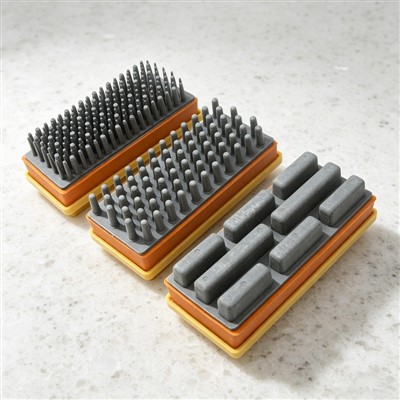
In conclusion, classical disc abrasives can be suitable for wet grinding, but it is important to understand the advantages and challenges associated with this application. The ability of classical disc abrasives to withstand the wet environment, combined with their compatibility with a variety of coolants, makes them a viable option for many grinding applications. However, proper maintenance and the selection of the right coolant are crucial to ensure the long – term performance of the disc.
Metal Frankfurt Abrasive If you are interested in learning more about our classical disc abrasives or have any questions regarding wet grinding applications, I encourage you to reach out to us. We are more than happy to discuss your specific needs and provide you with the best solutions for your grinding operations. Let’s start a conversation and explore how our products can meet your requirements.
References
- "Abrasive Technology Handbook" by Ramesh Singh
- "Grinding Technology: Theory and Applications of Machining with Abrasives" by Stephen Malkin
Quanzhou Cheefung New Materials Co., Ltd.
As one of the most experienced classical disc abrasive enterprises in China, we are able to meet the needs of the majority of our customers. Please feel free to wholesale advanced classical disc abrasive made in China here from our factory. For price consultation, contact us.
Address: Jinshan Community, Licheng District, Quanzhou City, Fujian, China
E-mail: info@prostonetools.com
WebSite: https://www.prostonetools.com/
