Hey everyone, if you’ve ever been knee-deep in a project that requires drilling—whether it’s for water, geothermal, oil and gas, construction, or even environmental testing—you’ve probably found yourself Googling “how much does drilling equipment cost” more times than you’d care to admit. And let’s be real, that search usually brings up a mess of vague estimates, random price points that make zero sense, and enough jargon to make your head spin. As a drilling equipment supplier who’s been in this game for over a decade, I’m here to cut through the noise and give you the straight talk. No fancy corporate fluff, no hidden agendas, just the real breakdown of what you can expect to pay for the gear you need. Drilling Equipment
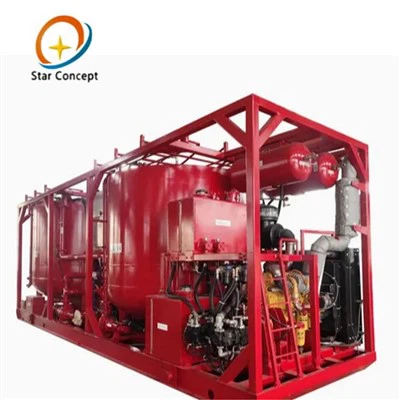
First off, let’s get one thing straight: drilling equipment isn’t a one-size-fits-all thing. A tiny, portable rig you can tote around for residential water well drilling is way different from the massive, crawler-mounted rigs used for offshore oil exploration. The cost varies so much depending on what you’re drilling, how deep you need to go, what terrain you’re working on, and even what extra features you want. I’ve had customers come to me thinking they can get a $10k rig that drills 500 feet, only to be shocked when I tell them that’s not how this works. Let’s break down the main categories of drilling gear, because that’s where the price differences start to make sense.
Let’s start with the smallest end of the spectrum: portable, lightweight drilling rigs. These are the ones you’d see a solo operator or a small crew using for things like monitoring wells, shallow water wells (usually under 300 feet), geothermal loops, or even small-scale construction projects. I’m talking about rigs that weigh anywhere from 500 pounds to 5,000 pounds, so you can tow them with a pickup truck or even a UTV. Now, what do these cost? On the lower end, you’re looking at around $15,000 to $30,000 for a basic, used portable rig. But if you want a brand-new one with all the bells and whistles—like a hydraulic drill, automatic rod handling, and a depth gauge that’s actually accurate—you’re looking at $40,000 to $80,000. I had a customer last year who was doing a series of 200-foot monitoring wells for a construction site, and he went with a used 2018 portable rig for $22,000. It did the job perfectly, no issues, and he saved enough money to buy all the extra bits he needed, like drill bits and casing. But another guy came in wanting a brand-new rig for a 400-foot water well, and he dropped $75,000 on one that could handle that depth and had the power to pull up a full casing without struggling.
Next up, mid-sized drilling rigs. These are the workhorses of the drilling world, used for things like residential water wells (300 to 1,500 feet), horizontal directional drilling (HDD) for utility lines, and small to medium construction foundations. These rigs are bigger, more powerful, and usually mounted on a truck or a tracked chassis, so they can handle rougher terrain than portable rigs. The price here jumps up a lot, and honestly, this is where most of my new customers land because they’re scaling up from small projects to bigger jobs. Used mid-sized rigs from the last 10 years will set you back anywhere from $80,000 to $250,000. Brand-new ones? You’re looking at $300,000 to $600,000, depending on the specs. Last quarter, I sold a mid-sized truck-mounted rig to a well drilling company that was expanding into 1,200-foot wells. They went with a demo model (so basically new, but with a little use) for $275,000, which was way cheaper than buying brand-new. They saved almost $150k, and it had all the features they needed—hydraulic swivel, remote control operation, and a rod carousel that cut down on manual labor. On the flip side, I had another customer who bought a used 2005 mid-sized rig for $95,000, but he ended up having to put $20k into repairs within the first six months, so that’s a thing to watch out for with used gear. You can’t just go by the price tag; you have to check the maintenance records, the hours on the engine, and whether the rig was properly stored.
Now, the big boys: heavy-duty drilling rigs. These are the ones used for offshore oil and gas drilling, deep water wells (over 1,500 feet), geothermal energy projects, and mineral exploration. These rigs are massive—some weigh hundreds of tons, have their own power plants, and can drill 10,000+ feet deep. Let me tell you, the cost here is not for the faint of heart. Used heavy-duty rigs from the last 15 years will start at around $500,000, but most are $1 million to $5 million. Brand-new ones? We’re talking $10 million to $25 million, and sometimes even more for custom builds. A few years back, I worked with a mining company that needed a rig for deep mineral exploration, and they ended up buying a custom-built rig for $18 million. It could drill 15,000 feet, handle harsh desert terrain, and had real-time data monitoring that let their team track the drilling process from their office. That’s not the kind of purchase you make on a whim; those are multi-year projects with teams of people, so you need gear that’s reliable and powerful enough for the job.
But wait, the rig itself isn’t the only cost. You can’t drill with just a drill—you need all the extra stuff, and that adds up fast. Let’s talk about the auxiliary equipment. First, drill bits. The type of bit you need depends on what you’re drilling through—rock, soil, concrete, sand, whatever. A basic drag bit for soft soil is $50 to $200, but a diamond bit for hard rock can be $1,000 to $10,000 each. And you go through them, especially if you’re drilling through granite or other tough rock. Then there’s drill casing—this is the pipe you put in the hole to keep it from collapsing. Casing prices depend on the diameter and material; PVC casing is cheaper, around $1 to $5 per foot, while steel casing can be $10 to $30 per foot (and way more for large diameters). If you’re drilling a 1,000-foot well, that’s 1,000 feet of casing, so that’s a huge expense. Add in rods, hoses, hydraulic parts, mud pumps (to keep the hole cool and flush out cuttings), and tools for maintenance, and you’re looking at 10% to 30% of the rig’s cost for auxiliary gear, depending on the size of the operation.
Then there’s the cost of ownership beyond the initial purchase. Maintenance, fuel, insurance, and labor for the crew all add up. A small portable rig might only cost a few hundred bucks a month in maintenance, but a heavy-duty rig can cost $10,000+ a month just for upkeep and fuel. And don’t forget about training—operating a drilling rig isn’t like driving a car. You need specialized training, and that’s another cost you have to factor in. Most new rig buyers send their operators to training courses that cost $1,000 to $3,000 per person, and that’s money well spent, because a bad operator can ruin a rig or cause accidents.
Now, a lot of people ask me if buying used is worth it. Short answer: sometimes, but it depends on your needs. If you’re a small business or a solo operator just starting out, a good used mid-sized rig can be a game-changer, as long as you have it inspected by a mechanic you trust. But if you’re doing high-volume, deep drilling for oil or mining, used might not be the best idea—those rigs have hundreds of thousands of hours on them, and breakdowns can cost you thousands in lost time. I’ve seen customers buy a used rig for half the price of new, then have it break down on a job that was scheduled to take two weeks, and they lost more in downtime than they saved on the rig. So it’s a balance between upfront cost and long-term reliability.
Another thing that affects price is customization. If you need a rig that can handle a specific terrain, like swampy land or steep hills, you’ll have to pay extra for modifications. If you want remote monitoring technology, GPS tracking, or automated rod handling, that’s going to add to the price. A lot of my customers come to me with a list of must-have features, and I work with them to find a rig that fits their budget without skimping on what they need. For example, a customer who was drilling in rocky mountains needed a rig with higher torque and reinforced components, so we added those features to a mid-sized rig, and it cost them an extra $30k, but it was worth it because it didn’t break down on the job.
I also want to mention financing, because that’s a big part of the equation for most people unless you’re a huge company with cash on hand. Drilling equipment is a big investment, so most buyers finance their rigs over 3 to 10 years. The monthly payments depend on the total cost, the interest rate, and the down payment. A $500k mid-sized rig with 20% down and a 5-year loan might have monthly payments of $8,000 to $10,000, which is manageable if you’re doing steady projects. Used rigs usually have better financing terms because they have a lower upfront cost, but the loan terms are shorter.
Wait, let’s not forget about rental. If you’re only doing one or two big projects a year, buying a rig might not make sense. Renting a drilling rig can cost anywhere from $500 a day for a small portable rig up to $50,000 a day for a heavy-duty offshore rig. That’s more expensive in the long run if you use it a lot, but it’s perfect for short-term projects. I have a lot of customers who rent a rig for a 6-month well drilling season, then return it, and that works way better for their budget than buying. It also means you don’t have to deal with maintenance and storage when you’re not using the gear.
Now, let’s get real about what I see as a supplier. A lot of vendors will just show you the price tag and not tell you the fine print, but that’s not how I roll. I always sit down with customers, ask them about their projects, how deep they need to drill, what terrain they’re working on, and how many hours they’ll use the rig. Then I present options, whether that’s new, used, or rental, and break down all the costs so they know exactly what they’re getting. I once had a guy who thought he needed a $60k brand-new mid-sized rig, but after talking to him, I realized he was only drilling 200-foot wells, so a used portable rig would do the job for $25k, saving him $35k. He ended up going with that, and he’s been a repeat customer ever since.
Common mistakes I see: buying too much rig for the job, which wastes money, or buying too little, which means you’ll have to upgrade in a year or two. Another mistake is not factoring in auxiliary costs—someone will budget $50k for a rig, then forget that drill bits and casing for their project will cost another $20k, and suddenly they’re over budget. That’s why I always give a full cost breakdown, not just the rig price, to every customer.
So, putting it all together, how much does drilling equipment cost? The short answer is: it depends. Like, really depends. For small, portable rigs, you’re looking at $15k to $80k. Mid-sized workhorses are $80k to $600k used, $300k to $600k+ new. Heavy-duty big rigs start at $500k used, $10M+ new. And don’t forget auxiliary costs, maintenance, labor, and financing if you need it.
If you’re in the market for drilling equipment, my advice is to do your homework first. Figure out exactly what you need it to do, how often you’ll use it, and what your budget really is. Then talk to a reputable supplier who will be honest with you, not just try to sell you the most expensive gear. I’m here for that—if you have questions, want to chat about a specific project, or get a customized quote, reach out. No pressure, no sales pitch, just straight answers.
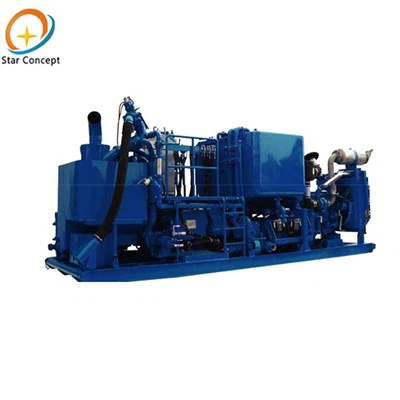
At the end of the day, drilling equipment is an investment, whether you’re a small startup or a big corporation. You want something that’s reliable, fits your needs, and won’t break the bank. I’ve been in this long enough to know that the best deal isn’t the cheapest one—it’s the one that works for your project, your budget, and your goals. So don’t hesitate to reach out if you’re ready to talk through your options.
Instrumentation References:
- International Association of Drilling Contractors. (2023). Drilling Equipment Cost Benchmarks. IADC Publications.
- U.S. Bureau of Labor Statistics. (2022). Costs of Heavy Construction and Mining Machinery. BLS Economic News Release.
- Drilling Contractors Magazine. (2024). Used vs. New Drilling Rig Cost Analysis. Drilling Media Group.
- National Ground Water Association. (2023). Water Well Drilling Equipment Specifications and Pricing. NGWA Technical Report.
- Horizontal Direction Drilling Association. (2022). HDD Equipment Cost Guide. HDDA Industry Standards.
Dongying Star Concept Petroleum Equipment Co., Ltd.
We are one of the most professional drilling equipment manufacturers and suppliers in China. With abundant experience, we warmly welcome you to buy durable drilling equipment made in China here from our factory. Good service and quality products are available.
Address: No. 9 Xisi Road, Dongying City, Shandong Province, China
E-mail: ellen@starconcept.cn
WebSite: https://www.star-cementing.com/
