Hey there, folks! If you’re reading this, you’re probably either in the market for a tertiary distribution box (TDB for short) and worried about keeping it safe during storm season, or you’re already using ours and wondering why that one box out back kept tripping every time a thunderclap hit. Let me cut to the chase—lightning doesn’t care how “solid” your electrical setup looks, and a TDB that takes a direct or even indirect hit can turn into a really expensive paperweight (or worse, a fire hazard). As a TDB supplier who’s been in this game for over a decade, I’ve seen more than a few preventable messes from bad lightning protection, and today I’m spilling exactly what works—no jargon, no sales fluff, just real, tested stuff that actually keeps your equipment up and running. Tertiary Distribution Box
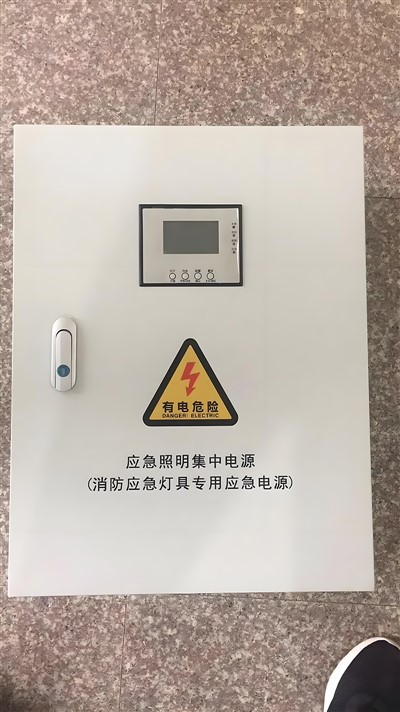
First, let’s get one thing straight: lightning doesn’t have to hit your TDB directly to fry it. Most people think a lightning strike is like a bullet hitting a target, but really, 90% of the damage we see on TDBs comes from “indirect strikes”—those big electrical surges that leap from a nearby lightning bolt, travel through power lines, utility poles, even the ground, and sneak into your box before you can say “cut the power.” I had a customer last year in a rural part of Ohio who lost three TDBs in a week because his old setup only had a basic surge protector made for a house, not for heavy-duty electrical gear like a TDB. That’s the mistake everyone makes: using off-the-shelf parts that aren’t rated for the job.
Now, let’s break down the actionable steps, the stuff we actually install on every TDB we ship these days (and will soon make mandatory for all our models—no exceptions). First up, the big one: install a Type 2 Surge Protection Device (SPD) inside the TDB, not just outside. Wait, let’s clarify the types because a lot of people mix these up. Type 1 is for the main utility line, right at the meter, but Type 2 is what you need in the TDB because that’s where the surges narrow down to your specific equipment. Our current go-to SPDs are rated for 40kA of surge current—yeah, that’s 40,000 amps, which is way more than any random indirect surge can throw at you. We don’t skimp here; if a customer tries to save a buck on a cheaper SPD that only does 20kA, we tell them straight up it’s not worth it. Last winter, a construction client of ours tested that exact thing: two TDBs side by side, one with our 40kA SPD, one with a cheap 20kA knockoff. They hit both with a controlled surge equivalent to a nearby lightning strike, and the knockoff fried in 10 seconds flat—no damage to the one with the good SPD. That’s not luck, that’s science.
But wait, an SPD only does so much if the TDB itself isn’t grounded properly. I can’t tell you how many times I’ve opened up a TDB at a job site and seen a grounding wire that’s half-cut, or attached to a random metal pipe instead of the actual building’s grounding electrode system. Here’s the rule: your TDB’s ground wire needs to be at least 6 gauge copper (no aluminum, ever—aluminum corrodes and loses conductivity fast) and connected to the main building’s ground rod and the utility company’s neutral ground. Don’t just run it to a loose stake in the dirt—dry soil can’t dissipate a surge, so that wire’s just sitting there, collecting static. We include a detailed grounding sheet with every TDB we sell, and if a customer calls us saying their TDB got hit, 8 times out of 10 they skipped the grounding step we outlined. It’s not rocket science, but it’s non-negotiable.
Next, seal the hell out of the TDB. A lot of newer TDBs are made to be weatherproof, but most only meet IP54, which means they’re protected from dust and splashes—not the kind of wind-driven rain that comes with thunderstorms, or even more importantly, moisture seeping in that can cause corrosion on the internal components that makes them more likely to get damaged by surges. We upgraded our TDBs a couple years back to IP65 rating, which means no water, dust, or dirt gets inside, but even if you have an older model, make sure all the cable glands (those rubber things around the wires coming in and out) are tightened down, and the lid’s not warped from being left in the sun. One of our first customers to test IP65 told us he left a TDB out in a storm last year by accident—we thought for sure it’d be toast, but he checked it the next day and the internal components were bone dry. That’s the kind of small detail that makes all the difference.
Another thing people sleep on: surge coordination. Let’s say you have a Type 1 SPD at the main meter, a Type 2 in the TDB, and maybe even a Type 3 on the equipment connected to the TDB. If they’re not coordinated, they’ll fight each other instead of working together—so a surge that should get stopped at the meter gets past, then the TDB’s SPD trips, and then the equipment’s SPD blows. We do the coordination calculations for every TDB we ship, but if you’re installing it yourself, don’t just grab any SPD—match the voltage rating to your TDB (most are 240V, but some industrial ones are 480V) and make sure the SPD’s “response time” is under 25 nanoseconds. If it’s slower than that, the surge will already have damaged your TDB before the SPD even kicks in. I’ve seen cheap SPDs with a response time of 100ns—totally useless. Do not waste your money on those.
Wait, what about surge arresters vs SPDs? Yeah, that’s another mix-up. Arresters are for high-voltage direct hits, while SPDs are for the surges that come through low-voltage lines. A lot of people try to use arresters for TDBs, but they’re overkill and can actually cause more damage if they fail short. Stick to the Type 2 SPDs—they’re designed exactly for the environment a TDB is in, where you have heavy loads and frequent surges.
Also, maintenance! Lightning protection isn’t a set-it-and-forget-it thing. Every 6 months, after storm season, and after any major thunderstorm (even if you didn’t see damage), you should check your TDB’s SPD and grounding. How? For the SPD, there’s usually a little indicator light—if it’s red, replace it immediately. Don’t wait till it fails, because once it’s done, it can’t absorb any more surges. For the grounding, grab a multimeter and test the resistance—It should be under 5 ohms. If it’s higher, that means corrosion or loose connections, and you need to fix it right away. We send out free test instructions with every TDB, and if a customer is confused, they can just call our team—no hoops to jump through, no sales pitch, just help. Last year, a regular customer called us in a panic after a small storm, said his light was red on the SPD. We walked him through replacing it over the phone in 5 minutes, saved him a service call and a lot of downtime. That’s the kind of support we give, not just selling a box and vanishing.
Wait, let’s talk about common mistakes I see all the time, because that’s what this is all about—avoiding the stuff that gets people in trouble. First, daisy-chaining wires in the TDB. A lot of installers run one big ground wire and split it to all the components, but if that wire gets a surge, it can cause voltage drop across each split, so some components don’t get the full protection. Instead, run a separate ground wire from each SPD and each key component directly back to the main grounding terminal. It takes a little more wire, but it’s way more effective. Second, installing the TDB near metal structures—like a fence, a power pole, or even the side of a metal building. Metal attracts lightning, so if your TDB is within 10 feet of a big metal thing, that’s like putting a target on it. If you can, move it at least 15 feet away from any tall metal structures, or install a lightning rod on the TDB’s location. Yeah, a lightning rod on a TDB—we actually offer a small, stainless steel rod as an add-on, and it’s saved a lot of customers who have TDBs in open fields or near barns. Third, not accounting for the TDB’s load. If your TDB is powering heavy equipment like industrial heaters or machinery, the surge load is way higher than a residential TDB, so you need a higher-rated SPD. Our standard industrial TDBs come with a 50kA SPD, not 40kA, because we know those loads are way more prone to surges.
Let me throw in a real example to make this concrete. A manufacturing client of ours in Illinois had a TDB powering a 3-phase conveyor system. They were losing a TDB every storm for two years, tried all the cheap fixes—ground wires that were too thin, off-the-shelf SPDs, sealing the lid with silicone that wore out. We went out to their site, tested their grounding (it was 12 ohms, way too high, because the ground rod was only 3 feet deep), replaced all their ground wires with 6 gauge copper, installed our IP65 TDB with a 50kA Type 2 SPD, added a 10-foot lightning rod, and walked them through the quarterly checks. It’s been three years now, no damage, no lost production. They told us last month that the cost of the fixes paid for itself in the first 6 months from not having to replace TDBs and fix the conveyor. That’s not a sales line—that’s what happens when you do it right.
Now, let’s talk about what not to do. Don’t use surge protectors made for houses. They’re rated for 15 amps, and your TDB is carrying hundreds or thousands of amps—they’ll blow instantly. Don’t skip grounding. I can’t stress that enough. Even if you have the best SPD on the market, if your TDB isn’t grounded properly, the surge has nowhere to go except through the components. Don’t ignore the indicator light on your SPD. That red light isn’t a suggestion—it’s a warning that your protection is gone. And don’t buy a cheap TDB just to save a few bucks. A cheap TDB has thin metal that bends, poor sealing, and bad internal components that can’t handle surges no matter what SPD you put in it. We’ve had customers call us because they bought a TDB from a guy on Alibaba for half the price, and it fried in one storm—cost them way more than the savings.
At the end of the day, lightning protection for a tertiary distribution box is about matching the parts to the job, not cutting corners. As a supplier, we don’t just sell you a box and an SPD—we give you the tools to install it right, test it, maintain it, and back it up if something goes wrong. If you’re not sure what your TDB needs, or if you have an old one that’s not holding up, just reach out to our team. We don’t do pushy sales calls, we don’t require you to buy a whole new setup if you just need to upgrade the SPD or fix your grounding. We’ve been doing this long enough to know that a good TDB and proper lightning protection is about keeping your operations running, not making an extra buck.
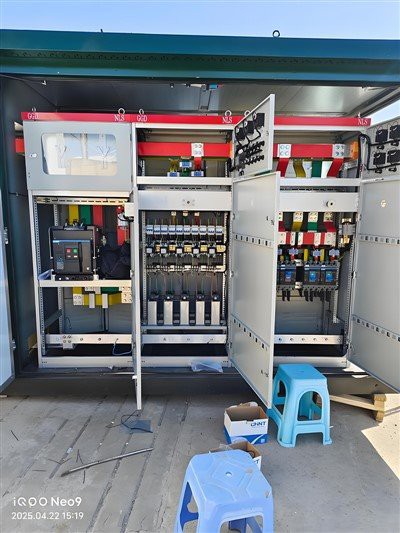
If you’re gearing up for storm season, don’t wait till the first thunderclap to check your TDB. Spend an hour this weekend (or next, if you’re swamped) testing your grounding, checking your SPD, and making sure the TDB is sealed tight. And if you’re in the market for a new TDB, or looking to upgrade your current setup, hit us up for a chat. We’ll walk you through exactly what you need, no jargon, no hidden fees, just the stuff that works. Lightning is gonna hit—sometimes it’s unavoidable—but you don’t have to let it mess up your whole day.
Tertiary Distribution Box References
Underwriters Laboratories. (2020). Standard for Surge Protection Equipment (SPDs) for Use in Power Distribution Systems, UL 1449.
International Electrotechnical Commission. (2018). Low-voltage surge protective devices – Part 1: Performance requirements and testing methods, IEC 61643-1.
National Fire Protection Association. (2021). NFPA 70: National Electrical Code, Article 285: Surge Protection.
Electrical Construction Maintenance. (2022). “Lightning Protection for Distribution Equipment: Common Pitfalls and Best Practices.” ECM Magazine.
Anhui Nanxian Electric Co., Ltd.
With abundant experience, we are one of the most professional tertiary distribution box manufacturers and suppliers in China. We warmly welcome you to buy advanced tertiary distribution box for sale here and get quotation from our factory. All customized products are with high quality and low price.
Address: Factory Unit 03-2, Building 21, Feidong Yinfeng Industrial Park Co., Ltd., Northeast Corner of Manquan Road and Changle Road, Hefei Circular Economy Demonstration Park, Feidong County, Hefei City, Anhui Province.
E-mail: 541580567@qq.com
WebSite: https://www.nxelepower.com/
