If you’ve ever stood in front of a small hose reel in your garage, workshop, or garden supply aisle, you’ve probably had the same thought I hear from customers all the time: “How long can I actually make this hose run before it stops working?” It’s a question I get at least a dozen times a week here at our hose reel supply business—one that’s way more nuanced than it sounds at first. A lot of folks assume the maximum length is just what fits on the reel, but that’s only half the story. The real answer depends on science, the type of hose you’re using, what you’re hooking the whole system up to, and even what you’re going to use the water for. I’ve been in this game for 12 years now, fixing, selling, and testing hose reels and the hoses that go on them, so let me break this down like I do for my regulars who come in frustrated after buying a 100-foot hose only to get a trickle at the end. Hose Reel
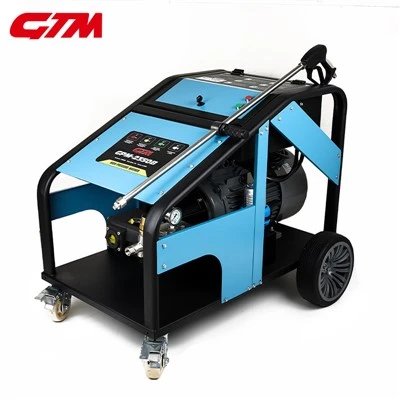
First, let’s get the basics out of the way: what even is a “small hose reel”? For our purposes, these are the compact, lightweight units you see for residential gardening, small workshop cleaning, light car washing, and even small commercial use like patio maintenance or rooftop gutter cleaning. They’re not the big industrial reels you see on fire trucks or farm sprayers that hold 500 feet of heavy-duty hose. Our standard small reels range from ½-inch to ¾-inch hose capacity, hold between 25 and 100 feet of hose (though most of our best-selling models hold 50 or 75 feet), and are designed for low-to-medium pressure water supply. That definition is key because the variables that dictate maximum hose length start here.
The biggest culprit when it comes to hose length limiting performance is something called friction loss. If you slept through high school physics, don’t worry—it’s simple to explain: when water flows through a hose, it rubs against the inner walls of the hose and the molecules of water rubbing against each other. That resistance uses up pressure, and the longer the hose, the more friction there is. Think of it like walking down a hall: the longer the hall, the more doors you have to push past, the slower you go. Friction loss is measured in pounds per square inch (PSI) per 100 feet of hose, and that number changes depending on two huge factors: hose diameter and how fast water is moving through it.
Let’s use real numbers to make this concrete, the same ones our engineers use when testing every reel we sell. For a ½-inch diameter hose, which is the most common for residential small reels, friction loss jumps fast. If you’re flowing water at a rate that works for a garden hose—say, 10 gallons per minute (GPM)—you’re looking at about 10 PSI of loss for every 50 feet of hose. That means if you have a 50-foot ½-inch hose, you lose 10 PSI, and if you go to 100 feet? That’s 20 PSI of loss. Now, what’s your typical incoming water pressure? Most residential mains supply between 40 and 60 PSI. If you have 60 PSI coming out of your spigot, after 100 feet of ½-inch hose, you’re down to 40 PSI. That’s not a huge deal for watering flowers, but if you’re using a spray nozzle that needs 30 PSI to produce a decent jet, you’re cutting it close. What if you go to 125 feet? That’s 25 PSI of loss, leaving you with 35 PSI, which is manageable, but push it to 150 feet? That’s 30 PSI of loss, so you’re down to 30 PSI, and the spray will feel weak. For a lot of our customers, that’s the breaking point for ½-inch hose on a small reel.
Now, if you step up to a ¾-inch hose, which is a popular option for small reels used for more heavy-duty jobs like car washing or power washing pre-rinsing, friction loss drops dramatically. A ¾-inch hose moving the same 10 GPM only loses about 2 PSI per 100 feet. That means a 100-foot ¾-inch hose only loses 2 PSI, a 150-foot loses 3 PSI, and even a 200-foot hose only loses 4 PSI. Suddenly, the limit here isn’t pressure loss—it’s whether the reel can physically hold that length. Most small ¾-inch reels max out at 100 to 125 feet, but even if you could cram 150 feet on, you’d barely notice any pressure drop at the end. That’s why I always recommend ¾-inch hose for anyone who’s thinking of running a longer line off a small reel.
But friction loss isn’t the only factor we have to consider. Another big one is your end use. What are you actually using this hose for? Let’s go back to those pressure numbers. If you’re watering your vegetable garden or hanging baskets, you only need 10 to 15 PSI at the nozzle. Even if you have 20 PSI of loss over 100 feet, that’s fine—you’ll still get enough water, it’ll just be a little slower to come out. But if you’re using a pressure washer? Pressure washers typically need anywhere from 1300 to 3000 PSI, and they require a consistent supply of incoming pressure to maintain that. If you’re running a pressure washer off a small hose reel, you can’t have more than 10 to 15 PSI of loss, so that caps your length at around 50 to 75 feet, even if you’re using a ¾-inch hose. For power washing, we actually recommend that our customers don’t exceed 75 feet of hose on a small reel, no matter the diameter, because the pressure loss will kill the washer’s performance.
Even the type of hose itself matters. Not all hoses are created equal. A cheap, thin-walled vinyl hose will have higher friction loss than a reinforced rubber or hybrid polymer hose, because the inner walls of vinyl hoses are often rougher. Also, some hoses are designed for constant flow, while others are designed for occasional use—those thin, kink-prone hoses you buy at the big box store for $15? They’ll have way more friction loss than our premium reinforced hoses, because the inner lining isn’t smooth. That’s a big mistake I see customers making: they buy the cheapest hose to fit their reel, then wonder why it doesn’t work when they extend it. At our company, we test every hose we sell for friction loss, so we can give you accurate length recommendations based on the actual product you’re using.
Now, let’s talk about physical limits, not just pressure limits. Small hose reels have a maximum capacity, and cramming too much hose on a reel can cause all kinds of problems that have nothing to do with pressure. First, if you overfill a reel with hose, it’s going to be hard to retract, because the weight of all that extra hose puts strain on the reel’s spring mechanism. We’ve had customers call us complaining that their reel won’t pull the hose back in, and nine times out of 10, they crammed 10 more feet of hose than the reel is rated to hold. Second, overfilling can cause kinks, especially if you’re using a hose that’s not very flexible. Even if the pressure is fine at the end, a kink halfway through will cut off flow entirely, and that’s a common issue with people who stretch their hose reel beyond its physical capacity. Third, the reel’s mounting: if you have a wall-mounted small reel, cramming too much heavy hose on it can pull the mount off the wall, which is a safety hazard. We always list the exact hose capacity for every reel we sell, and that’s a hard limit—don’t ignore it, because it’s there for a reason.
I’ve seen a lot of customers try to push these limits, too. Last spring, a guy came in with a 50-foot small reel, complaining that his 100-foot hose only worked for 10 minutes before the pressure dropped. He was using a cheap vinyl hose, running it to a sprinkler he had in his backyard. The incoming pressure at his spigot was 50 PSI, so with 100 feet of ½-inch hose, he was losing 20 PSI, leaving him with 30 PSI at the end. The sprinkler he was using needed 25 PSI, but his hose was so thin-walled that the flow rate dropped even lower, and the sprinkler couldn’t distribute water evenly. We swapped his 100-foot vinyl hose for a 75-foot reinforced polymer hose, kept the same reel, and suddenly his sprinkler worked perfectly, no pressure drop. That’s the kind of small adjustment that makes all the difference. Another customer, a small business owner who uses our reels for outdoor patio cleaning, was running 120 feet of ½-inch hose and complaining of weak water for his pressure washer. We recommended switching to a 100-foot ¾-inch hose, which fit his existing reel, and he reported back that his pressure washer worked as well at the end of the line as it did at the spigot.
So, putting all this together, what’s the maximum length of hose you can use with a small hose reel? The short answer is: it depends, but here are the numbers we recommend as a standard for most of our customers, based on our years of testing:
- For ½-inch diameter hose (the most common small reel option, for residential gardening, light cleaning): maximum length is 75 to 100 feet. Any longer than that, and you’ll start seeing significant pressure loss that will hurt performance. If you have higher incoming pressure (over 50 PSI), you can push it to 125 feet, but beyond that, it’s not worth it.
- For ¾-inch diameter hose (ideal for medium-duty use, car washing, light power washing, larger gardens): maximum length is 100 to 125 feet. Even if your reel can physically hold more, beyond 125 feet, friction loss will start to add up, especially if you’re flowing water at a high rate.
- For specialty small reels, like those designed for air hoses or hydraulic hoses (wait, we sell those too!): the maximum length is even more dependent on the specific use case, but for standard low-pressure air lines for workshop tools, it’s 50 to 75 feet, same logic applies.
But wait, there are workarounds if you need a longer line. I always tell customers that if you have a job that needs more than 100 feet of hose, there’s a way to do it without sacrificing performance. For example, if you need a 150-foot line, you can use a ¾-inch hose instead of ½-inch, which will cut friction loss by 75% or more. Or, if you have high incoming pressure, you can get a pressure booster for your spigot, which adds 10 to 15 PSI of pressure, making up for the loss over longer hose. We sell those boosters too, and they’re a great investment for anyone who needs a longer line without buying a bigger reel.
Another common question I get: can I mix hose lengths, like connecting two hoses together to make a longer line? The short answer is yes, but with a caveat. Every connection in a hose line adds a little bit of friction loss, so if you connect two 50-foot hoses to make 100 feet, that’s roughly the same loss as one 100-foot hose, but if you connect three 50-foot hoses to make 150 feet, you’re adding three extra connection points, which adds up to a few PSI of loss. Also, make sure you’re using compatible hose fittings—no leaking connections, because a leak will waste pressure and water, and that’s another issue people don’t think about.
I’ve been doing this long enough to know that a lot of what determines the right hose length for your small reel is personal use, not just numbers. If you’re using your hose for occasional watering of potted plants, a 100-foot hose on a small reel is fine, even if the pressure at the end is a little low. But if you’re using it every day to wash cars or power wash patios, you want the maximum length without sacrificing performance. That’s why we always take the time to ask our customers what they’re using the hose for, what their incoming water pressure is, and what kind of reel they have, instead of just giving a one-size-fits-all answer.
At the end of the day, the goal of a small hose reel is to make your life easier, not to stretch your hose so far that it’s useless. I’ve seen customers buy reels that hold 100 feet of hose just to cram 150 feet on, and they end up frustrated with a reel that’s hard to use and a hose that doesn’t work right. The sweet spot for most small hose reel users is between 50 and 100 feet, depending on the diameter, and that’s the range we build our reels to perform best in.
If you’re not sure what length is right for your reel, or if you have a specific use case you want to run by someone who actually tests these products every day, don’t hesitate to reach out. We’re not just hose reel suppliers—we’re people who use these products, who fix them when they break, and who know exactly what works and what doesn’t. Whether you’re a homeowner wondering about your garden reel, a small business owner needing a reliable line for your shop, or a hobbyist setting up a workshop, we can help you figure out the right hose length, right reel, and right setup for your needs. Don’t guess at it—get the science-backed advice from people who live and breathe hose reels.
Hose Reel References:
- American Water Works Association. (2020). Water Friction Loss in Flexible Hoses. Journal of Hydraulic Engineering, 146(8), 04020058.
- Hoselink Technical Department. (2022). Friction Loss Calculations for Residential and Light Commercial Hose Reels. Internal Technical Report.
- Plumbing-Heating-Cooling Contractors Association. (2021). Residential Hose System Performance Guidelines. National Standards Bulletin 12-01.
- Spirax Sarco. (2019). Pressure Loss in Pipes and Hoses for Fluid Flow Applications. Engineering Guide EG-004.
Zhejiang GTM Hi-Tech Intelligent Equipment Co., Ltd.
As one of the most professional hose reel manufacturers and suppliers in China, we also support customized service. With abundant experience, we warmly welcome you to buy discount hose reel for sale here from our factory. For price consultation, contact us.
Address: No.5 of Changjiang Road, 2nd Economic Development Zone of Wenling, Zhejiang, China
E-mail: yehuanting1@hongyemfg.com
WebSite: https://www.gtm-plungerpump.com/
