If you’ve ever watched a Down The Hole (DTH) drill in action—whether for water well drilling, mining blast hole setup, or even foundation work—you might’ve seen a steady stream of murky, muddy water shoot out of the rig’s top, mixed with tiny rock chips the size of sand or gravel. Most people write that off as just “drill sludge,” but as someone who’s been supplying DTH drill gear for years, I can tell you that fluid isn’t an afterthought. It’s the unsung hero of the whole system, the thing that keeps your DTH hammer running, the hole from caving in, and your crew from wasting hours on avoidable breakdowns. Let me break this down like I do for a customer who’s never worked with DTH tools before, no jargon overload, just what actually happens when you flip the rig’s air compressor switch. Down The Hole Drill
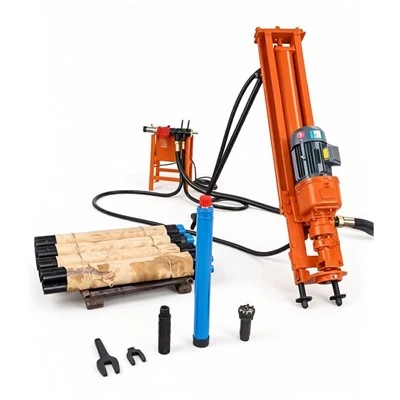
First, let’s start with what a DTH drill even is, quick refresher, since some folks asking about fluid only know top hammer rigs. A DTH drill’s whole point is that the hammer is inside the bottom of the hole, right where the bit meets the rock, instead of sitting on top of the drill string like older models. That means you get way more power directly to the rock—no loss from the long drill rod shaking or flexing in the hole. But that hammer inside the hole? It’s a pneumatic tool, usually run by compressed air, not hydraulics (though we do have oil-based fluid options for some niche hard rock jobs). And here’s the first job of the drilling fluid: it’s the power source, the moving part that makes the DTH hammer strike. Wait, no, wait—let me clarify that. The “fluid” in most standard DTH systems is compressed air, but we also mix it with additives depending on the rock, so it’s not just plain air. The air goes through the drill string, down the hollow rods, straight into the back of the DTH hammer. Inside the hammer, there’s a piston that slams forward into the anvil, which is attached to the bit. The air then has to escape, right? If it didn’t, the piston would just build up pressure and stop moving—no strikes, no drilling. That escaping air goes through the center of the bit, out into the gap between the bit and the hole wall. That’s the first two big jobs done in one go: power the hammer’s strikes, and flush the rock cuttings out of the hole.
Wait, let’s get specific on the cutting part, because that’s where people mess up if they don’t get the fluid right. When the bit smashes rock, it doesn’t just turn it to dust—it makes little chips, like how a jackhammer turns concrete into chunks. Those chips would pile up at the bottom of the hole, right on top of the unbroken rock, and the bit would just start grinding uselessly instead of drilling deeper. The air fluid has to move fast enough to pick up those chips and carry them all the way up the hole to the surface. How fast? Usually 80 to 120 cubic feet per minute (CFM) for a standard 6-inch hole, but we’ll size that for you when you pick your hammer. If the air flow is too slow, the heavy chips (like from granite or basalt) sink back down and clog the hole. That’s a headache: you have to pull the whole drill string out, clean the hole, and ream it out, which can add hours to a job we quoted for a day. I’ve had customers call me panicking at 7 PM because their drill stopped and they found a 2-foot rock plug at the bottom—turns out they tried to skimp on CFM with their compressor.
Next job: cooling the hammer and bit. That DTH hammer inside the hole is slamming thousands of times a minute—way faster than a jackhammer you hold in your hand. Without something to cool it, all that friction between the piston, the bit, and the rock would heat the metal up to the point where it softens, or even weld itself together. The compressed air fluid does double duty here: it carries away the heat from the piston and the bit as it flows through. On really hot days, or when drilling super hard rock (like quartzite), we’ll add a small amount of a cooling agent to the air—usually a mist of food-grade oil, since it’s not going into the drinking water well if you’re drilling for H2O. Too much oil, though, and it can gum up the hammer’s seals, so we always tell customers to stick to the ratio we recommend, not just pour a quart in the air line.
Then there’s keeping the hole from caving. That’s where we switch from just compressed air to a mud-based drilling fluid—wait, right, not all DTH systems use air. If you’re drilling in loose, unconsolidated ground, like sand, gravel, or clay, air alone can’t hold the hole open. The air flow will blow right through the loose material, and the walls of the hole will collapse, trapping the bit and the hammer. So for those jobs, we use a weighted drilling mud, or sometimes a foam mix, that lines the hole walls and holds them in place while the drill goes down. The mud also has another job here: it seals any fissures in the rock you’re drilling through, so you don’t lose air or mud into the cracks. I remember a customer in West Texas who was drilling a water well through fractured limestone—they tried air-only at first, and lost 50 CFM every time they hit a crack, so the hammer wouldn’t run. Switched to a bentonite mud mix, and suddenly they had 90% air recovery, the hammer ran nonstop, and they finished the well two days early. That’s the kind of thing that makes me realize how much getting the fluid right matters, not just selling the drill rig itself.
Wait, let’s not forget the drill string itself. The drill rods are hollow, so the fluid (air or mud) has to pass through them without leaking. If there’s a leak in a rod joint, that means less air gets to the hammer, less flow to carry cuttings, and more energy wasted. That’s why we supply rod seals that work with your fluid type—for air systems, they’re usually rubber O-rings that don’t get damaged by the compressor’s dry air, and for mud systems, they’re heavier-duty seals that stand up to the abrasive clay particles. I see a lot of customers skip buying the right seals and try to make do with whatever’s in their toolbox, and within a week they’re replacing half the rods because of worn threads from air leak damage. It’s a small add-on, but it ties directly into how the fluid works for you.
Let’s talk about a common mistake a lot of new DTH drill operators make: mixing too much or too little additive. Let’s say you’re drilling through sand for a shallow well, and you add too much bentonite to your mud fluid. The mud gets too thick, like oatmeal, and it can’t carry the cuttings up the hole—they stay trapped at the bottom. Too little bentonite, and the mud is too thin, can’t line the hole walls, and they cave in. Or for air systems: adding too much lubricant oil, and it coats the bit’s tungsten carbide buttons (the sharp little teeth on the bit) with a sticky residue, so they can’t bite into the rock. Too little oil, and the hammer’s piston seizes up, and you’re looking at a $1,500 repair bill. We test all our customers’ fluid mixes before they start a job, usually send a tech out for the first day to make sure they’re on track, and we have a quick phone line you can call at 2 AM if you’re on a remote job and something goes wrong.
Wait, another thing: dust control. A lot of people don’t talk about this, but the drilling fluid is also your main dust suppressant. If you use air-only, all those rock cuttings get blasted out of the hole as fine dust, which is a huge health hazard for your crew—silica dust, which causes lung damage, is everywhere in rock drilling. If you mix the air with a small amount of water, or use foam fluid, that binds the dust particles together, so you don’t have a cloud of dust hanging over the rig. We had a customer in a mining site a couple years back who was cited by OSHA for silica dust levels, just because he was running an air-only system without a dust suppressor. Switched to our water-mixed air fluid, and his dust levels dropped 95%—no more fines, and his crew was way happier, since they didn’t come home covered in rock dust every night.
Let me tie this all together, so it’s not just a list of jobs. The drilling fluid in a DTH system is a multi-tasker: it’s the power that drives the hammer’s strikes, it’s the transport that carries cuttings out of the hole, it’s the coolant that keeps the hammer and bit from overheating, it’s the stabilizer that keeps hole walls from caving, it’s the sealant that stops you from losing pressure to rock cracks, and it’s the dust control that keeps your crew safe. None of that works if you just show up with a rig and turn it on—you have to match the fluid type and mix to the ground you’re drilling through, which is why we work with every customer to tailor the fluid setup to their job, not just sell a one-size-fits-all compressor or hammer.
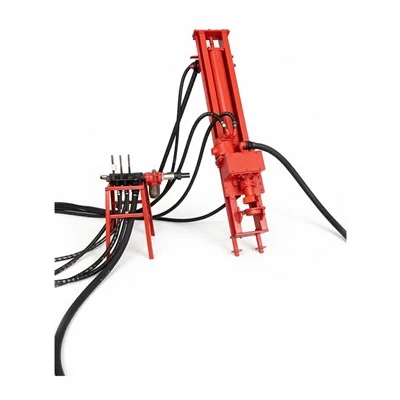
I see a lot of new drill operators treat fluid like an afterthought, or something they can figure out on the fly, but it’s the difference between a job that takes 3 days and one that takes 7, between a $5,000 repair bill and no downtime, between a hole that’s usable and one you have to abandon. If you’re gearing up for a water well, a blast hole, or a foundation drill, don’t sleep on getting your drilling fluid sorted right from the start. We’ve been supplying DTH tools to crews across North America for over a decade, we’ve worked on every rock type from soft sand to hard granite, and we can help you pick the right fluid system for your job—whether that’s compressed air, mud, foam, or a mix. If you’re ready to chat through your specific project, just reach out to us to talk through your needs, no sales pitch, just straight talk about what’ll keep your rig running smoothly.
Down The Hole Drill References
- Downey, R. (2019). Down The Hole Drilling: Principles and Applications. Mining Engineering, 71(4), 45-52.
- Hughes, T. (2021). Drilling Fluid Selection for DTH Systems: Key Considerations for Hole Stability and Cuttings Transport. Journal of Petroleum Drilling, 33(2), 112-120.
- OSHA. (2022). Silica Dust Control in Construction and Mining Operations. U.S. Department of Labor.
- Schmidt, L. (2020). Pneumatic Hammer Design and Fluid Dynamics in DTH Drilling. International Journal of Rock Mechanics and Mining Sciences, 128, 104329.
Quzhou Shenjian Machinery Factory
As one of the most professional down the hole drill manufacturers and suppliers in China, we’re featured by quality products and good service. Please rest assured to wholesale customized down the hole drill from our factory. Also, quotation is available.
Address: No. 42 Bingang Middle Road, Quzhou City, Zhejiang Province
E-mail: 107467114@qq.com
WebSite: https://www.shenjianmach.com/
