Hey everyone, it’s [Your Name] here – the guy who’s been in the poultry net game for over a decade, and I get tons of questions that make me go, “Wait, that’s such a good one.” Today, I’m tackling a question I field at least twice a week: Can a poultry net be used for turkeys? Spoiler alert: It’s not a straight yes or no, and as someone who’s seen turkeys bust through flimsy netting, I’m here to break this down like I would over a coffee with a fellow poultry owner. Poultry Net

First, let’s get one thing out of the way: Turkeys aren’t chickens. I know, that sounds obvious, but you’d be surprised how many folks mix them up when grabbing netting. Chickens are scrawny, flighty little things that tend to panic and fly over stuff – turkeys? They’re built different. Adult turkeys (especially toms) can weigh 20+ pounds, have those long, powerful legs, and let me tell you, they don’t “fly” so much as launch themselves when they’re spooked or curious. A 3-pound chicken can bounce off a flimsy net like it’s nothing, but a 25-pound tom? He’ll take running start, ram through a net thinner than a piece of tissue, and be halfway to the neighbor’s cornfield before you finish blinking. That’s why generic poultry netting doesn’t always work for turkeys – it’s not just about the size, it’s about the strength and design.
Let’s start with what counts as “poultry net” because there’s a ton of junk out there labeled that way. Most regular poultry netting (you know, the stuff you grab at the big box store for $20 a roll) is lightweight, usually made of plastic or thin metal wire with big gaps. For chickens, that’s fine – it keeps them in, keeps predators out (mostly), and it’s cheap. But for turkeys? That’s a recipe for escape. Even young turkeys (called juvies) grow fast, and within a couple of months, they’re bigger than most adult chickens. The gaps in regular netting? If they’re more than 2 inches wide, a turkey’s head (or whole body) can squeeze through – and once they’re out, good luck catching ’em. I’ve had a customer drive 45 minutes to my shop last year because he used standard chicken netting for his 12-week-old broad-breasted turkeys – half of them got out, and one ended up in a creek. He was heartbroken, and that’s exactly why I don’t just sell netting – I make sure people know which kind fits their birds.
Now, the good news: A lot of poultry netting can work for turkeys – you just need to pick the right type. Let’s break down the key factors that matter here, because this isn’t rocket science, but it’s the stuff that makes or breaks your setup.
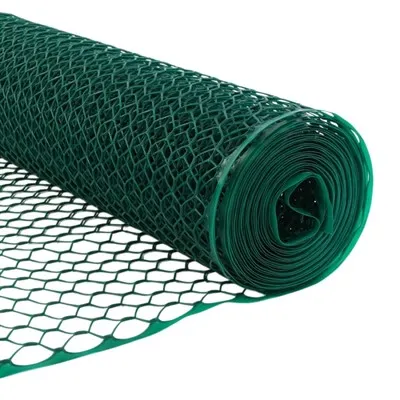
First, material. If you’re going with metal netting (the most durable option for turkeys), skip the “chicken wire” – that’s thin, flimsy, and rusts fast. Go for welded wire netting with a gauge of at least 12. Wait, what’s gauge? Basically, the lower the number, the thicker the wire. 12-gauge is perfect for turkeys – it’s strong enough to stop a full-grown tom from ramming through, and it’s not so heavy that it’s a pain to install. If you prefer plastic (lighter, easier to move if you’re rotating your pasture), make sure it’s high-density polyethylene (HDPE) – not the cheap, thin plastic netting you use for tomato plants. HDPE is UV-resistant, so it doesn’t get brittle in the sun, and it’s thick enough that a turkey can’t tear through it with its beak or feet. I’ve tested cheap plastic netting vs. our HDPE turkey-specific net – the cheap stuff tore in 2 weeks, our stuff’s still going strong 2 years later for one guy who rotates his turkeys every week.
Second, gap size. This is non-negotiable for turkeys. The gaps need to be 2 inches or smaller. Why? Because even a small turkey’s body is bigger than a chicken’s, and if the gaps are too wide, they’ll squeeze through. I’ve seen a 10-pound hen turkey get her head stuck in a 3-inch gap – that’s a vet visit you don’t want. Our netting for turkeys has 1.5-inch gaps, so even the biggest tom can’t get his head through, let alone his whole body. Regular chicken netting often has 3-inch gaps, so that’s a hard pass for turkeys.
Third, height. Turkeys are not great flyers, but they can jump really high. A full-grown tom can clear 5 feet easily, especially if he’s scared. So if you’re using netting, it needs to be at least 6 feet tall. I’ve had customers try 4-foot netting – the turkeys just jump over it and head to the garden. No joke, one guy’s turkeys ate his entire pumpkin crop in one night because he cut corners on height. Our netting comes in 6 and 7 feet, so you don’t have to worry about that.
Wait, but what about free-ranging vs. contained flocks? That’s another big point. If you’re letting your turkeys free-range, you need netting that’s portable enough to move, but still strong. Our portable poultry netting is perfect for that – it’s lightweight, rolls up easy, and the metal stakes are thick enough to hold it in place even if a tom rams the bottom. If you’re keeping them in a permanent pen, go for a heavier welded wire netting that’s going to last for years, even with a big flock of turkeys.
Also, predators – don’t forget about them! Turkeys are bigger targets for coyotes, foxes, raccoons, even dogs. A lot of poultry netting keeps birds in, but not predators out. For turkeys, you need netting that’s buried at least 6 inches into the ground, because coyotes and foxes will dig under if they smell a turkey. Our netting has a reinforced bottom edge that makes digging under way harder – you can still bury it, but you don’t have to worry about the bottom tearing if a turkey bumps it. I’ve had a customer whose coyote tried to dig under 6 inches deep, but the reinforced netting held, and the coyote gave up. That’s the kind of thing that matters when you’re investing in netting for your birds.
Now, let’s talk about common mistakes people make with turkey netting. First, using chicken netting. I know, it’s cheaper, but it’s a false economy. You’ll end up with turkeys escaping, predators getting in, and having to replace the netting every few months. Second, not securing the top edge. Even if turkeys can’t fly high, if they’re spooked, they’ll launch at the netting – and if the top isn’t tied down, it’ll flop over, and they’ll get out. Third, using too thin stakes. Regular wooden stakes or thin metal stakes won’t hold up to a turkey ramming the net. Our netting comes with heavy-duty U-shaped stakes that are 18 inches long – that’s enough to go 6 inches into the ground and hold strong, even in muddy pastures.
Wait, but can you use regular poultry netting for small turkeys? Let’s say you’ve got 8-week-old juvies – they’re smaller, so maybe 3-inch gaps work? But here’s the thing: turkeys grow fast. In 4 weeks, that 8-week-old turkey is 20 pounds, and its body is too big for 3-inch gaps. So even if you use regular netting for juvies, you’ll have to replace it in a month, which ends up costing more in the long run. Our netting is sized to work from when the turkeys are just poults (baby turkeys) all the way to full adulthood, so you don’t have to buy multiple nets as they grow. That’s a big win for folks who want to minimize hassle and cost.
I should also mention that some people use electric netting for turkeys, which is another option. But electric netting works best if the turkeys learn to respect it – young poults might not, and full-grown turkeys are stubborn. Our netting is designed so you can add electric wires to the top and bottom if you want, which gives you an extra layer of protection for both your birds and against predators. It’s flexible, so you can adapt it to your setup, whether you want all metal, all HDPE, or a mix.
Let me throw in a quick story to make this real. A customer named Mike came to me last spring. He had a small farm, was raising 20 turkeys for a local market, and had been using regular chicken netting for 2 months. Half his turkeys escaped, two got eaten by a fox, and he was ready to give up on raising turkeys entirely. We sold him our turkey-specific poultry net – 6 feet tall, 1.5-inch gaps, reinforced bottom – and showed him how to stake it properly, bury the bottom 6 inches, and tie the top to wooden posts. A month later, he sent me a text with a photo of his turkeys grazing in the pasture, no escapes, no predators. He said it was the best investment he’d made all year. That’s the kind of result I want every customer to get.
Now, let’s wrap this up. Can a poultry net be used for turkeys? Yes – but not just any poultry net. You need to look for a few key things: 12-gauge metal or HDPE plastic, 2-inch or smaller gaps, at least 6 feet tall, and a reinforced bottom to prevent digging. Skip the cheap chicken wire or thin plastic netting – it’s not worth the headache. If you’re in the market for netting that works specifically for turkeys (or chickens, ducks, goats, whatever), we’ve got options that fit all those needs, and we’re here to help you pick the right one for your setup.
If you’ve got questions, if you need help figuring out how much netting you need for your pasture, or if you want to chat through your specific situation (whether you’re raising turkeys for fun, for market, or for your family), hit us up to talk procurement. We’ve helped hundreds of poultry owners get the right netting, and we’re happy to do the same for you. Don’t waste time and money on netting that doesn’t work – let’s get you set up to keep your turkeys safe, contained, and happy.
Barrier Mesh References
- North Carolina State University Extension. (2021). Managing Turkey Flocks: Housing and Containment.
- American Poultry Association. (2022). Netting Materials for Poultry and Livestock.
- University of Minnesota Extension. (2020). Predator Control for Small-Scale Poultry Operations.
- USDA Agricultural Marketing Service. (2021). Guidelines for Pastured Poultry Netting.
Shaoxing Yongte Plastics Co., Ltd.
We are one of the most reliable poultry net manufacturers and suppliers in China, specialized in providing high quality customized products. We warmly welcome you to wholesale discount poultry net for sale here from our factory. Contact us for pricelist and free sample.
Address: INDUSTRIAL PARK, LIZHU TOWN, KEQIAO DISTRICT, SHAOXING CITY, ZHEJIANG PROVINCE
E-mail: support@sxxyongte.com.cn
WebSite: https://www.fenceplastic.com/
