If you’ve ever spent time in a music rehearsal room, you know the feeling: playing guitar or singing into a mic only to have your sound bounce back in weird, messy waves, making it hard to hear your bandmates or even yourself. When I started selling acoustic sound panels a few years ago, this is the exact issue I saw musicians struggling with day in and day out. Most would show up to our showroom complaining that their rehearsal space felt either too echoey, so they couldn’t nail their harmonies, or too dead, like the sound was disappearing into a black hole. That’s when I knew a lot of bands still had no clue how acoustic panels could solve these problems—and no, they aren’t just for fancy recording studios. They work perfectly in rehearsal rooms too, if you use them right. Let me walk you through why that’s true, how to pick the right panels, and what you’ll actually gain from installing them. Acoustic Sound Panels

First, let’s get one common myth out of the way: acoustic panels aren’t just for making a room “soundproof.” Soundproofing keeps noise from leaving a space (great if you practice next to apartment buildings), but acoustic panels do something different—they control the sound inside the room, taming unwanted echo and reverberation. Rehearsal rooms, more than almost any other space, need this balance. Think about what happens when a band plays a set in a room that’s all hard, bare surfaces: concrete walls, wooden floors, uninsulated ceilings. When a drummer hits a snare, the sound bounces off every hard surface 20 or 30 times before it dies down. A guitar amp’s high notes will stick around so long they clash with the bass’s low end, and singers can’t project clearly because their own voice is bouncing back at them instead of spreading evenly. I’ve watched a drummer in a local punk band leave a rehearsal once because he said the room made his fills sound muddy, and he couldn’t keep time. That’s the kind of small, fixable frustration panels can eliminate.
Now, why are acoustic panels the right tool here, specifically? Unlike thick fiberglass insulation (which works better for blocking low-frequency noise that seeps through walls, not the messy bounce in the room), panels are designed to absorb specific sound frequencies. Most rehearsal rooms have two main problems: too much high- and mid-frequency echo from guitar amps, vocals, and snare drums, and often too little control over low frequencies from bass guitars and kick drums. Quality acoustic panels target both. The core material of a good panel is usually a dense, porous substance like mineral wool or polyester fiber—materials that trap sound waves as they pass through, turning them into tiny bits of heat instead of letting them bounce back. The thickness of the panel matters too: a 2-inch panel works great for mid and high frequencies (the ones that make your vocals sound harsh or your guitar pick scratchy), while a 4-inch panel will catch more low-frequency rumble from bass. That’s perfect for rehearsal rooms, where low-end buildup is a constant headache if you don’t have enough absorption.
I learned this firsthand last year when a folk trio reached out to me, saying their small rehearsal space in a converted garage sounded terrible. They were practicing three-part harmonies, but every note was overlapping because the room’s 10-foot ceiling was all bare wood, and the side walls were just drywall. They’d tried hanging blankets, but they said the blankets sagged, didn’t absorb enough of the sound, and made the room feel like a cave when they took them down. We sent them 2-inch panels for the side walls (where most mid and high frequency bounce was coming from) and a 4-inch panel for one back corner to tame bass buildup. A week later, they texted me a video of them practicing, and I could hear the difference immediately: their harmonies were crisp, the acoustic guitar wasn’t booming, and the vocalist didn’t have to strain to hear herself. That’s the kind of result that makes this work—acoustic panels aren’t a luxury, they’re a functional upgrade for spaces where you actually need to play and practice, not just record.
But wait, not all acoustic panels are created equal, and that’s where a lot of bands waste money. I’ve had people come to me asking for “cheap panels” to cover all their walls, but that’s the wrong approach. Too much absorption is as bad as too little—your room will feel dead, like you’re playing in a closet, and that makes it impossible to adjust your playing dynamics. The goal in a rehearsal room isn’t to eliminate all echo; it’s to reduce reverberation to a manageable level, usually between 1 and 1.5 seconds for a small to medium rehearsal space. How do you calculate that? A quick rule of thumb: for a 12×15 foot room, you’ll need about 200 square feet of panel coverage, split between critical spots. Those spots are called sound nodes, and they’re the places where echo builds up the most. The biggest culprits are the first reflection points—usually the side walls on either side of where the band stands, about 2 to 4 feet off the ground, directly between the singer/guitarist and their audience (or, in this case, the rest of the band). Those are the first places I tell customers to put panels. The back wall behind the drum kit is another big one, because drummers’ low frequencies bounce off that wall and get muddy. And if your ceiling is too high or too reflective, a few panels hung from the ceiling can cut down on overhead echo without making the room feel cramped.
I’ve seen this go wrong when a band covers every wall with panels. Last spring, a local metal band did exactly that—they ordered 500 square feet of thick panels and covered every inch of their 20×20 rehearsal room. When they practiced, they texted me saying it felt like they were playing in a padded box; their vocals felt thin, the guitar lost its punch, and the bass practically disappeared. We went back and adjusted: we removed half the panels, only kept them on the first reflection points and back wall, left the front wall and part of the ceiling bare. Suddenly, their sound came back—they had enough echo to feel the space when they played, but not so much that everything blended together. That’s the balance everyone needs to aim for, and it’s why talking to a panel supplier (someone who’s actually worked with musicians, not just architects) is so helpful. We don’t just sell you panels—we help you figure out how many and where to put them based on your room size and the kind of music you play. A metal band needs different placement than a jazz quartet, for example—metal leans into heavier low end, so more panels on the back wall, while jazz needs more mid-range absorption to keep brass and piano notes clear.
Another common question I get: do acoustic panels work for live rehearsals where you’re miking up, or just for practicing with amps? The answer is yes, both. For bands that record demos in their rehearsal space, panels cut down on room noise that gets picked up by mics, so you get a cleaner sound without having to spend thousands on a separate studio. For bands that just practice to play shows, panels let everyone hear each other better, which means you’ll play tighter as a group. I remember a cover band that was struggling to keep their timing during weekly practices; the guitarist and bassist were always out of sync because the drummer’s snare echo was bouncing around so much they couldn’t hear his fills clearly. After they installed panels on the side walls, they said within two practice sessions, their timing was perfect. That’s the kind of tangible improvement that makes a huge difference for a band that’s playing local gigs.
Let’s talk about durability, too—something bands care a lot about. Rehearsal rooms get rough: people moving amps, throwing set lists, spilling drinks. Acoustic panels, especially the ones we manufacture, are made to handle that. We use a hard, fabric covering that’s scratch-resistant and stain-resistant, so they don’t look ragged after a few months. They’re also mounted to the wall with heavy-duty brackets, so they don’t fall off when someone bumps into them. Unlike foam panels that start to peel and crumble after a year, our panels last for years, even with weekly use. I’ve had customers call me after three years saying their panels still look and work the same as day one. That’s a big plus for bands that don’t want to replace their acoustic setup every few months.
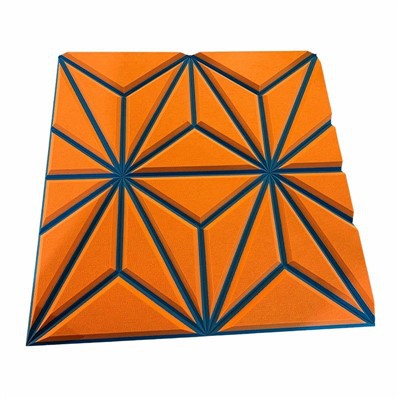
Wait, what about aesthetics? A lot of musicians I talk to say they don’t want their rehearsal room to look like a recording studio’s control room—they want it to feel like their space, with posters, gear, and all the stuff that makes it theirs. Acoustic panels don’t have to be ugly, plain black rectangles. We offer a range of fabric colors and even custom printing, so you can have panels that match your band’s logo, or blend in with your wall paint, or stand out as a decor piece. I had a pop punk band order panels printed with their band’s graphic, so they hung them on the side walls, and they looked like part of their rehearsal space’s decor, not just functional gear. That’s a small detail, but it’s important for a lot of bands that want their space to feel personal, not sterile.
Now, let’s get real about cost. I know bands operate on tight budgets, especially newer ones. Acoustic panels aren’t as expensive as you might think, especially when you compare them to other fixes. Soundproofing a wall can cost hundreds of dollars, and most of it goes toward stopping outside noise, not improving the sound inside. The cheapest way to get better sound in your rehearsal room is still to add targeted acoustic panels. For a small room, you can get a full set of panels for under $1,000, which is less than most bands spend on new pedals or amp mods in a year. And unlike hanging blankets or using old carpet, panels give you consistent results—blotting varies depending on how tight you pull it, but panels are engineered to absorb the right frequencies every time.
I want to be clear: acoustic panels aren’t a magic fix. If your rehearsal room has big gaps under the door, or thin drywall that lets outside noise in, panels alone won’t fix that. But paired with basic soundproofing fixes like door sweeps, they’ll solve most of the sound-related issues bands face during practice. They’ll make your sound clearer, help you hear your bandmates better, and let you practice with confidence, knowing your playing sounds good in the space you use the most.
If you’re a band that’s dealing with muddy sound, echo that makes it hard to sing, or bass rumble that overpowers everything else, acoustic panels are absolutely worth looking into. I’ve helped dozens of local bands upgrade their rehearsal spaces over the years, and not one has regretted it. The process is simple: you can measure your room, tell us what genre you play, and we’ll help you figure out exactly how many panels you need, where to put them, and which ones fit your style and budget. No pushy sales pitches, no complicated jargon—just real advice from someone who’s spent years working with musicians and understanding what they need.
If you’re ready to stop struggling with messy sound during rehearsal and start playing with clarity and confidence, reach out to us to discuss your acoustic needs. Let’s work together to make your rehearsal space work for you, not against you.
Acoustic Tiles References
- "Acoustic Design for Music Performance Spaces," Acoustical Society of America, 2022.
- Noise Control: A Guide for Musicians and Music Venues, National Institute for Occupational Safety and Health, 2021.
- "Optimal Reverberation Times for Rehearsal Rooms," Journal of Sound and Vibration, vol. 450, 2019, pp. 116682.
- Practical Acoustics for Musicians, Berklee Press, 2020.
Suzhou Trano New Material Technology Co., Ltd.
As one of the most professional acoustic sound panels manufacturers and suppliers in China, we also support customized service. Please feel free to buy bulk high quality acoustic sound panels for sale here from our factory. For price consultation, contact us.
Address: SuZhou
E-mail: info@trano-tech.com
WebSite: https://www.tranofelt.com/
