If you’ve ever knelt down to patch a fiber optic network, rummaged through a bin of loose adapters like they’re spare Lego pieces, and thought, “Wait—none of these fit,” you’re not alone. As someone who’s spent the last eight years as a fiber optic adapter supplier, I hear this confusion at least a dozen times a week from installers, network techs, and even project managers who assume all LC adapters are cut from the same cloth. Let’s set the record straight once and for all: no, not all LC adapters are the same size. And the gap between “almost the same” and “this won’t seat right” can mean hours of rework, delayed deployments, and unnecessary cost. Fiber Optic Adapter
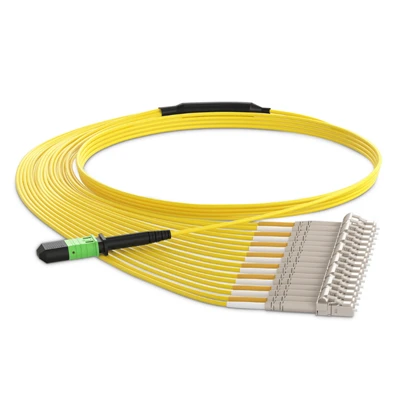
I started in this business back when LC adapters first started replacing the larger SC connectors that dominated the 2000s. Back then, the LC connector was billed as a “small form factor” upgrade—half the size of SC, perfect for cramming more ports into data centers, server racks, and telecom enclosures. Early adapters were simple: plastic housings with ceramic sleeves, designed to mate LC duplex connectors without fuss. But over time, as the fiber industry boomed and new use cases popped up, manufacturers started tweaking dimensions, tolerances, and features to fit niche needs. What was meant to be a universal standard slowly splintered into a handful of sizes that aren’t interchangeable.
Let’s break down why size variations happen, because it’s not just a random design flaw. First, there’s the core standard you’d think would keep everything consistent: TIA-568-C.3, the Telecommunications Industry Association’s specification for optical fiber cables and components. That standard lays out the dimensions for the LC connector’s ferrule (the tiny ceramic part that actually aligns the fiber core) and the outer shell, right? But here’s the catch: TIA’s specs for adapters only govern the critical mating interfaces—the part that touches the LC connector. They leave room for variations in the housing’s overall size, locking tabs, and even the depth of the mounting holes, depending on what the adapter is designed to work with.
Take, for example, the LC simplex adapter. A standard simplex LC adapter is roughly 12mm wide, 18mm long, and 10mm tall. But if you need to mount it into a thin-wall server rack panel, some manufacturers make a “low-profile” simplex LC adapter that’s only 8mm tall. That sounds great on paper—until you realize the locking tab is moved 2mm inward to fit the shorter housing. If you mix a low-profile simplex adapter with a standard LC connector, the locking tab won’t catch. The connector will slide right out, even if it looks like it’s seated. I had a customer last year who ordered 500 low-profile simplex adapters to upgrade a 10G data center, but they didn’t tell their suppliers they needed to pair them with matching low-profile LC connectors. Result? Two weeks of downtime during peak migration, because every time they pulled a port, the connector slipped out. We had to rush-make custom adapters to fit their existing connectors, and they still lost a day of revenue from delayed server upgrades.
Then there’s the duplex LC adapter, which is where most of the size confusion happens. The duplex adapter is the workhorse of fiber networks, used for linking two fibers in a transceiver or switch port. Standard duplex LC adapters are 25mm wide, 18mm long, and 10mm tall. But there are two common variants that are not interchangeable: the “wide” duplex LC adapter and the “narrow” duplex LC adapter. The narrow variant is often called a “compact duplex” or “LC Quad” adapter, and it’s designed to let you fit four duplex connections in the space of three standard duplex adapters—critical for dense 40G and 100G networks where every millimeter of rack space costs money. The wide duplex, on the other hand, has a slightly wider housing to accommodate a latching collar for certain Cisco and Juniper transceivers, which require extra tension to stay seated in high-vibration environments. I’ve seen installers force a narrow duplex adapter into a wide transceiver port, only to break the plastic housing of the transceiver. Replacement for that single transceiver runs $150, and a mistake like that can sink a vendor’s reputation on a big job.
Size variations also come from special use cases, like wet-rated adapters for outdoor fiber runs. An LC adapter used for aerial or underground cable connections has to be sealed to keep moisture out, dust out, and withstand temperature extremes from -40°F to 180°F. To do that, manufacturers add a rubber or silicone gasket around the edge of the adapter. That gasket adds 3-5mm to the overall size of the adapter, which means it won’t fit into a standard 19-inch rack panel’s port holes. You have to order a special oversized mounting plate for wet-rated adapters, or else spend time drilling wider holes—time that’s hard to come by when you’re digging up a lawn to splice a fiber drop for a new business. I’ve had landscapers show up on job sites where we’d installed outdoor adapters and drill extra holes to mount standard indoor adapters, because no one mentioned the seal when they ordered.
Another often-overlooked size factor is the type of fiber the adapter is designed for. Single-mode and multi-mode LC connectors are slightly different in the ferrule’s inner diameter (single-mode ferrules are 125μm outer diameter, 9μm inner; multi-mode are 125μm outer, 50 or 62.5μm inner). But wait—does that change the adapter size? The mating sleeve that holds the ferrule has a standard inner diameter to fit either, but some manufacturers make the outer housing slightly thicker for single-mode adapters, because single-mode networks are usually high-speed, high-reliability deployments that need extra durability. If you try to plug a multi-mode LC connector into a thick-walled single-mode adapter, the ferrule won’t seat all the way, leading to high insertion loss and dropped signals. I’ve seen that happen in a hospital’s IT network when a new tech swapped out multi-mode adapters for extra single-mode ones during a bandwidth upgrade. Patients’ EHR systems started glitching mid-appointment, and we had to send a tech to the site at 2 a.m. to fix it.
So how do you avoid this mess? The first rule is: never assume any LC adapter will fit any LC connector. If a job spec just says “LC adapter,” push for more detail. Ask for the overall dimensions, the type of duplex or simplex (narrow or wide), whether it’s low-profile or standard, and if it’s rated for indoor or outdoor use. The second rule is: buy from a supplier that tests their adapters for interchangeability. Too many cut-rate suppliers source adapters from overseas factories that don’t adhere to tight tolerances, and their “standard” LC adapters can vary by up to 0.5mm in width—enough to make them not fit into standard rack ports. We test every batch of adapters we sell by mating them with 10 different brand-name LC connectors, from Cisco to CommScope, to make sure they seat, latch, and maintain insertion loss below 0.3dB (the industry standard for good performance).
I also recommend keeping a “test batch” of adapters on hand for every job. Even if you order exactly what the spec says, small batch variations happen. Spend 10 minutes before installation testing a few adapters with the connectors you’re going to use. It’s way better than spending 10 hours fixing a botched installation.

If you’re currently working on a fiber project and are tired of chasing adapters that fit right, or if you’re worried about the size of adapters for your next deployment, reach out to our team to discuss your requirements. We can help you specify the right LC adapters for your environment, test compatibility with your existing hardware, and provide bulk orders that fit seamlessly into your racks, enclosures, and outdoor runs. We’ve worked with small independent installers and large telecom providers alike, so we know how to balance performance, size, and cost for any job.
Fiber Optic Box References
TIA-568-C.3-2008, Standard for Optical Fiber Cabling Components. Telecommunications Industry Association, 2008.
“LC Connector Size and Dimension Guide.” Fiber Optic Association, 2021.
“Dense WDM Network Design: Managing Adapter Compatibility.” Telecom Infrastructure Magazine, Vol. 12, No. 4, 2020, pp. 45-52.
“Outdoor Fiber Optic Adapter Sealing Requirements.” IEEE Transactions on Communications, Vol. 67, No. 9, 2019, pp. 6214-6221.
Shenzhen Dimi Telecommunications Co., Ltd.
As one of the most professional fiber optic adapter manufacturers and suppliers in China, our products have good reputation in the market. Please rest assured to wholesale advanced fiber optic adapter made in China here from our factory. Also, custom service is available.
Address: China
E-mail: sales@dimifiber.com
WebSite: https://www.dimi-fiber.com/
