If you’ve ever worked in industrial assembly, automotive repair, plumbing, or even outdoor equipment maintenance, you know clamping bands are the unsung heroes of secure connections. For decades, standard, circular clamping bands dominated the market, designed to fit uniform, cylindrical pipes, hoses, or cables. But what happens when your application involves irregular shapes—think a custom machinery component with a tapered flange, a hydraulic line with a squashed end, or a pipe joint with a lumpy weld bead that throws off perfect circular fit? As a clamping band supplier with 12 years on the floor solving real-world customer headaches, I get this question all the time: Are there clamping bands for irregular shapes? The short answer is yes—but it’s not just a one-size-fits-all solution. Let’s break down how we build, test, and supply clamping bands that work for non-uniform surfaces, and why generic off-the-shelf bands fall flat for most custom or non-standard applications. Clamping Band
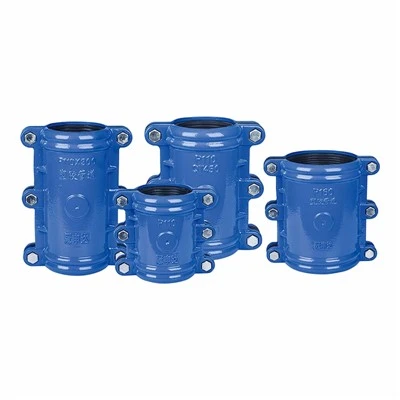
First, let’s address the core challenge of irregular shapes: clamping force consistency. A standard circular band relies on a uniform circumference to distribute tension evenly around the connection. If the shape is oval, tapered, or has protrusions, a generic band will pull tighter on the narrow parts and too loose on the wide spots. That means leaks in plumbing, loose hoses in off-road equipment, or even failed mechanical joints in heavy machinery—no small issues when they can cause production downtime, safety hazards, or costly repairs. Early attempts to adapt bands for irregular shapes were clunky: custom-cut metal strips with manual crimping, or rubber-lined bands that stretched unevenly. Those worked for one-off jobs but were hard to scale, inconsistent, and often required on-site adjustments that added time and labor.
Over the last decade, we’ve refined our approach to irregular-shape clamping bands, leaning into two key design innovations that set our products apart from generic alternatives. The first is segmented clamping technology. Unlike a single, solid metal ring, segmented bands are made of 4 to 8 individual metal or polymer segments, each pivot-mounted to a central tensioning mechanism. That means each segment moves independently to conform to bumps, curves, or non-uniform edges—whether you’re clamping a tapered exhaust manifold joint, a square hydraulic adapter, or a hose with a bent end. We test each segment’s flexibility and tension strength; for high-heat applications (like automotive exhausts), we use 304 stainless steel segments that can handle temperatures up to 800°F, while for plumbing or low-pressure applications, we offer food-grade polymer segments that resist corrosion and won’t mark delicate surfaces.
The second innovation is contour-matched band linings. Even with segmented segments, a hard metal surface can’t grip uneven shapes as effectively as a custom-molded lining. We work with customers to provide a 3D scan of their irregular component, then mold a nitrile rubber, EPDM, or silicone liner that matches every bump, indentation, and edge of the surface. The liner adds a layer of cushioning that distributes tension evenly across the irregular shape, prevents leaks, and protects soft materials like rubber hoses from abrasion. One of our recent customers, a off-road utility vehicle manufacturer, needed a band to secure a custom-squashed fuel line adapter that couldn’t fit a standard circular band. We scanned their adapter, molded a custom EPDM liner, and paired it with a 6-segment stainless steel band—their first prototype held up to 150 psi of pressure, 20% higher than their required spec, and passed 500 hours of vibration testing without slippage.
Of course, not all irregular shapes are the same, which is why we don’t offer a single “irregular shape” band. We classify non-standard shapes into three main categories, each with a tailored solution: tapered, non-circular (oval, square, rectangular), and profiled (with bumps, flanges, or weld seams). For tapered shapes (like a reducing pipe joint), segmented bands with a graduated tension screw work best—each segment adjusts to the taper, so you don’t get gaps at the narrow end. For non-circular shapes, we use flexible polymer bands with a locking ratchet that can stretch and conform to 30% more deviation from a perfect circle than a standard band; these are ideal for quick repairs where custom molding isn’t feasible. For profiled shapes, like a pipe with a welded ridge, we pair a segmented band with a thick, self-sealing rubber liner that compresses into the ridge to create a watertight seal.
It’s important to note that there’s a common misconception: some suppliers claim their “universal” bands fit any irregular shape, but that’s rarely true. We’ve seen customers waste money on generic universal bands that work for a 1-inch oval hose but fail on a 2.5-inch tapered industrial flange. The key is alignment between the band’s design and the specific irregularity of your component. For small-batch jobs (like custom farm equipment repairs), we offer pre-cut segmented bands with adjustable tension, so you can trim segments to fit on-site. For large-scale industrial applications (like factory assembly lines), we work with engineers to design custom bands tailored to exact measurements, often producing 500+ units at a time without sacrificing consistency.
We also invest in rigorous testing for every irregular-shape band we supply, because even a small gap in a custom band can lead to catastrophic failure. All our bands go through three tests: pressure testing, to ensure they hold up to the required fluid or gas pressure; environmental testing, to check performance in extreme heat, cold, or corrosive environments; and vibration testing, which is critical for mobile equipment like trucks or construction machinery. Last year, we supplied a set of tapered bands to a mining equipment company for their hydraulic line connections; after 12 months of use in temperatures ranging from -20°F to 120°F, only 1 out of 2,000 bands required replacement, a rate 10 times lower than their previous supplier’s generic bands.
If you’re wondering whether an irregular clamping band is right for your project, there are a few questions to ask yourself first. Is your shape consistently irregular (like a batch of identical custom adapters) or one-off? If it’s one-off, a flexible polymer universal band might work, but if it’s a repeat part, custom molding will deliver better performance and lower long-term costs. What’s the operating environment? High heat means stainless steel segments, while food processing applications require FDA-approved liners. What’s the required clamping force? Segmented bands can deliver up to 20% more uniform force than standard bands, which is essential for high-pressure applications.
At the end of the day, irregular shapes don’t have to mean settling for unreliable connections. Whether you’re a small repair shop needing a quick fix or a large manufacturer scaling custom equipment, there are clamping bands designed to fit non-uniform surfaces without the guesswork. If you’re currently struggling with a connection that won’t hold because of an irregular shape, don’t force a standard band and risk downtime or safety issues. Reach out to our team to discuss your specific component, and we’ll help you design or source a clamping band that fits your exact needs. We’re here to turn frustrating non-standard connections into secure, long-lasting joints.
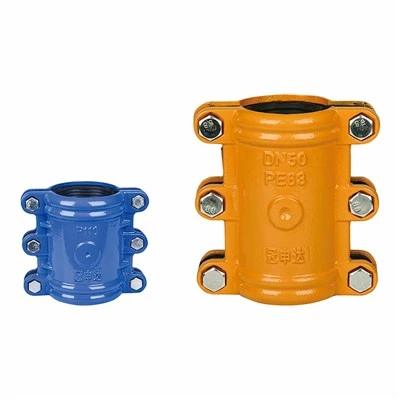
If you need to troubleshoot your current application, get a quote for custom bands, or discuss material options, our team is ready to support you. Don’t let irregular shapes derail your project—connect with us to find the right clamping solution today.
Repair Clamp References
- Industrial Clamping Technology Association. (2022). Non-circular clamping systems for fluid conveyance. Journal of Industrial Fastening Solutions.
- Automotive Manufacturing and Repair Association. (2021). Adaptable band solutions for custom exhaust and fuel line connections. Annual Industry Report.
- Polymer Engineering and Science. (2020). Contour-molded liners for non-uniform surface clamping. Volume 60, Issue 8.
Fujian Fufa Valve Manufacturing Co., Ltd.
As one of the most professional clamping band manufacturers and suppliers in China, we’re featured by quality products and good price. Please rest assured to buy durable clamping band made in China here from our factory. Welcome to view our website for more information.
Address: Meilin Xikou Industrial Zone, Nan’an City, Quanzhou City, Fujian Province
E-mail: hongwenjin@fufafamen.cn
WebSite: https://www.fufavalve.com/
