If you’ve ever stood in a beach supply aisle, staring at the same nylon and insulated vinyl tote bags that line every shelf, you know the frustration: that frayed nylon strap that snaps mid-walk to the water, the thin lining that soaks through after one wave crash, the lack of pockets for a portable charger or medication, and the sad truth that most “beach bags” are designed for weekend mall runs, not 8-hour days in sun, sand, and salt. For years, brands have acted like the beach bag is a one-size-fits-all product—something to throw sunscreen, a towel, and a paperback into, then forget until the next summer trip. But as someone who’s spent years sourcing and building “other bags” for beach use, I’m here to tell you: there are way more options than the generic tote, and many solve the exact problems you didn’t know you had until your last beach day went sideways. Other Bags
First, let’s talk about the limits of the “standard” beach bag. The typical design is a 10-15 oz nylon tote, lined with a thin polyester that’s not water-resistant, with two 1-inch straps that can’t handle more than 10 pounds of gear. It’s made for indoor use: it folds flat, looks cute with a graphic print, and is cheap to mass produce, but it’s terrible for saltwater, sand, or the uneven terrain of a dune. Last summer, a customer reached out to our team with a story that’s all too common: she’d brought her dog’s collapsible water bowl, a cooler insert for her sparkling water, a first-aid kit for her kid’s scraped knee, and her partner’s prescription allergy meds in a standard tote. By the time they’d walked 50 yards from the parking lot, the straps had stretched so far she was holding it by the bottom, sand had leaked through the seam into the allergy meds, and her water bowl had burst, soaking a $40 sunscreen bottle. That’s not a failure of the customer—it’s a failure of the generic beach bag, which is built for style, not function.
So what are the “other bags” that work for real beach days, not Instagram reels? Let’s start with the least obvious: waterproof duffels. Wait, no—wait, not the gym duffel your brother uses for cross country practice. We’re talking about sand-proof, puncture-resistant duffels made from 1680D ballistic polyester, the same material used for heavy-duty backpacks and boat covers. I know, duffels sound bulky, but the good ones weigh less than 2 pounds, have a roll-top closure that creates a watertight seal (even if you toss it in the shallows by accident), and have reinforced handles that can hold 50 pounds of gear without stretching. Last month, we supplied a small surf school with these duffels for their students: each holds a wetsuit, a pair of fins, a towel, and a snack, and after three months of weekly beach use, not a single seam has split, not a speck of sand has seeped in, and the material has resisted the sun’s UV rays without fading. The secret here is the fabric: unlike cheap nylon, 1680D polyester has a UV inhibitor built in, so it won’t turn brittle after three summers of being left in a garage or car trunk, and it’s coated with a polyurethane layer that repels water, so even if you dump a cooler full of ice into it, nothing gets wet inside.
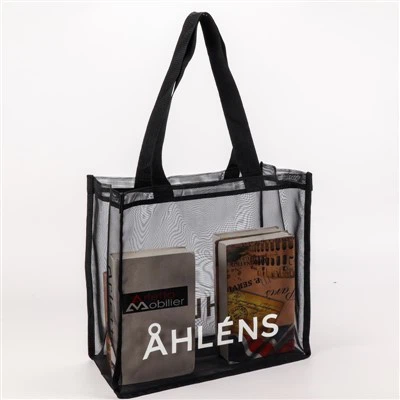
Next, there are waders’ bags. No, not the bags used for fishing waders—we’re talking about lightweight, mesh-lined drawstring bags that are designed to pull sand right out. Here’s how that works: the outer fabric is a tough polyester, but the bottom and sides are made from a 1mm polyester mesh with 1mm openings, small enough to keep your phone (in a waterproof case), towel, and keys inside, but big enough that any sand, salt, or even water that splashes in will fall right out when you hang it by the handles. I used to think mesh bags were just for laundry, but I tested one last summer at a local beach: after 2 hours building sandcastles, I shook out my waders’ bag once, and 90% of the sand that had gotten stuck in my towel and my kid’s toys was gone, no more dumping a whole bag into the grass and spending 10 minutes sifting through a pile of sand. The best versions have a drawstring closure that you can cinch tight enough to keep small items from falling out, but not so tight that it’s hard to open with wet hands. We’ve even modified these for people with mobility issues: we added a shoulder strap so you can carry the bag without straining your wrists, which is a big plus for anyone who can’t haul a heavy tote around the beach.
Then there’s the beach cart bag—wait, hear me out. A lot of people see beach carts as separate from bags, but the best cart bags are integrated, so you don’t have to balance a bag on the side of a cart while you walk down the beach. We’ve been working with a small cart manufacturer to design a modular bag that attaches to any standard beach cart, with insulated pockets for drinks, a mesh pocket for a cooler ice pack, a dedicated spot for a portable sun canopy, and even a small keychain pocket that you can reach without unzipping the whole bag. The beauty here is that it solves the problem of space: most standard beach carts only hold a few items, but this modular bag adds 30 liters of storage without making the cart too heavy to push over dunes. I’ve seen families use this at Cape Cod, where the parking lot is a half-mile walk from the beach: they load the bag with towels, snacks, sunscreen, and toys, attach it to the cart, and push it all the way, no more carrying heavy bags or leaving items behind in the car. The key feature here is the attachment system: it’s made with heavy-duty Velcro and buckles that won’t come undone when the cart hits a small rock or a patch of sand, so you don’t have to stop every 10 yards to reattach the bag.
Wait, but what about people who don’t want a bulky duffel or a cart? What about people who just need something small for a day trip, not a full 8-hour beach stay? That’s where the waterproof crossbody bags come in, designed specifically for beach use, not for hiking. Let’s be clear: not all crossbody bags are good for the beach. A regular leather crossbody will get ruined by saltwater and sun, and a cheap vinyl one will crack after one summer. The beach-specific ones are made from 100% waterproof neoprene (the same material used for wetsuits) or a coated polyester, with a sealed zipper that won’t let sand or water seep through. They’re small, so you can only fit your phone, a tube of sunscreen, a lip balm, and your keys, but that’s exactly what you need if you’re going for a quick dip, or if you want to keep your valuables safe while you play volleyball. Last year, a group of lifeguards ordered 50 of these for their shifts: they can clip the crossbody to their lifeguard belt, keep their phone and emergency whistle inside, and even toss it in the water if they need to, because the neoprene floats. That’s a huge upgrade from a regular crossbody, which would sink to the bottom and get ruined if you drop it in the ocean.
Now, I know what some people are thinking: “These sound nice, but they’re probably expensive.” It’s true that a good beach duffel costs $60-$80, and a crossbody is $20-$30, which is more than the $10-$15 generic tote you can find at a dollar store. But let’s do the math: the average cheap beach tote lasts 1-2 summers, because the straps break, the lining falls apart, or it gets stained beyond repair from salt or sunscreen. The duffels and crossbodies we supply are built to last 5+ summers, so over time, they’re actually cheaper. Plus, think about the hidden costs: that generic tote that can’t hold 50 pounds of gear means you might have to make two trips from the parking lot to the beach, which is a hassle if you have kids, or you might have to leave a cooler at the car because the tote can’t hold it. The bags we make eliminate that, so you can spend more time at the beach, less time running back and forth.
Another thing to consider: sustainability. Most generic beach bags are made from virgin nylon, which is a plastic that takes 20-30 years to decompose, and they’re often used once or twice before being thrown away. The “other bags” we supply are made from recycled materials: our duffels are made from 100% recycled polyester, sourced from post-consumer plastic bottles, and our mesh bags and crossbodies are made from recycled neoprene. That means when you buy one of these bags, you’re not just getting a product that works better—you’re reducing the amount of plastic that ends up in landfills and oceans. A study from the Ocean Conservancy found that single-use plastic items, including cheap tote bags, make up 10% of all ocean plastic pollution, so choosing a reusable, durable beach bag is a small change that makes a big difference.
Of course, no bag is perfect. Even the best duffel will get a little sand inside, and the crossbody can only hold so much. But the difference is that these “other bags” are designed with the beach in mind, not the grocery store or the mall. They’re tested in real conditions: we take our duffels to the Outer Banks, where the wind is strong and the sand is fine, and our crossbodies to the Gulf Coast, where the water is warm and the salt content is high, to make sure they hold up. We don’t add unnecessary graphic prints or flashy logos, because those just fade in the sun. Instead, we focus on features that matter: reinforced straps, watertight closures, sand-draining mesh, and UV resistance.
If you’ve ever had a beach day ruined by a broken strap, sand in your phone, or a soggy cooler, I get it. That’s why we started making these bags: because the beach should be about fun, not about replacing your ruined tote or digging sand out of your allergy meds. Whether you’re a family heading to the beach for the summer, a surfer needing a bag for your wetsuit, a lifeguard needing a secure place for your phone, or just someone who wants a bag that actually works, we have options that fit your needs. We work with everyone: small retail stores, large beach rental companies, families, and individuals, so no matter how many bags you need, we can accommodate you.

If you’re tired of generic beach bags that don’t deliver, if you want a bag that’s built for the beach, not for show, we’re here to help. Reach out to our team to discuss your needs, whether you’re looking for a custom order, a bulk purchase, or just a few bags for your family. We’ll work with you to find the right solution, so your next beach day is stress-free, and your bag lasts for years.
Storage Bag References
- Ocean Conservancy. (2023). Global Beach Cleanup Report: Plastic Pollution in Coastal Ecosystems.
- Outdoor Industry Association. (2022). Recreational Gear Durability Study: Performance of Beach Bags in Coastal Environments.
- Textile Institute. (2021). Performance Characteristics of UV-Resistant Polyester Fabrics for Outdoor Recreational Use.
- American Academy of Dermatology. (2020). Sun Protection for Recreational Activities: Choosing Functional Outdoor Gear.
Jiade (Wenzhou) Daily Necessities Co., Ltd.
As one of the most professional bags manufacturers and suppliers in China, we’re featured by quality products and good price. Please rest assured to buy bulk discount bags from our factory. We also accept customized orders.
Address: Building2,NO.1299,keji Road, Longgang City,Wenzhou City,Zhejiang Province,China.
E-mail: lhf@lianhaibag.com
WebSite: https://www.jiadebag.com/
