When we talk about axial fans in industrial ventilation, HVAC, or agricultural drying applications, most folks picture a straight, propeller-style blade spinning inside a cylindrical casing—simple, reliable, and straightforward for moving large volumes of air at moderate static pressures. But as someone who’s spent 12 years sourcing, testing, and supplying axial fans for facilities across North America, I’ve seen firsthand how a seemingly small design tweak can completely shift a fan’s performance curve, energy use, and long-term value. That tweak? The mixed-flow design. It’s not a “new” fan type by any means, but too many end-users and even some engineers don’t fully grasp how it differs from a standard axial fan, and how that difference impacts the bottom line of their operations. Axial Fan
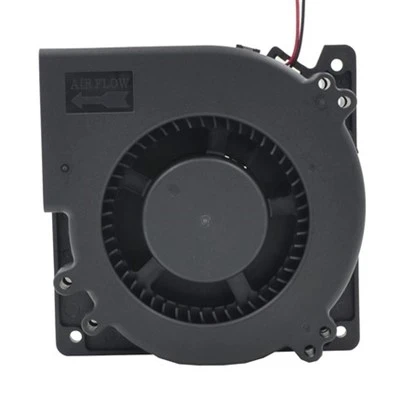
Let’s start with the basics to set the stage. A standard axial fan moves air parallel to the fan’s axis—think of a box fan blowing straight out the front. The blades are shaped like airfoils pitched to generate lift, pushing air forward with minimal change to the flow direction. That works great for high-volume, low-resistance spaces: a warehouse with open bays, a gymnasium’s cross-ventilation, or a greenhouse with thin plastic barriers. But push that same fan into a space with any kind of back pressure—say, a duct 150 feet long, a filter bank with a MERV-13 rating, or a heat exchanger that restricts airflow—and things start to break down. Standard axial fans drop off hard when static pressure rises; their airflow volume plummets, and energy efficiency tanks because the motor has to work harder to overcome the resistance, often wasting 15–20% more power than necessary.
That’s where mixed-flow design comes in. A mixed-flow axial fan (sometimes called a medium-flow fan) blends axial and radial flow dynamics: the air starts moving parallel to the axis, like a standard axial fan, but as it moves through the blade row, it’s angled slightly outward and upward at a gradual slope, before exiting the fan casing. That subtle shift in flow direction is the core of its performance advantage. Let’s break down how that plays out in real-world scenarios, not just textbook equations.
First, airflow at static pressure. I recently worked with a food processing plant that was struggling with their existing axial fans in their spray drying system. They had four 48-inch standard axial fans running 24/7 to pull air through the drying chambers, but as the filters clogged over time, the fan airflow dropped 22%, leading to inconsistent product moisture and 10% more energy use to keep the drying temperatures steady. We swapped those standard fans for mixed-flow units of the same diameter, same motor horsepower, and same casing. The difference was immediate: even with fully clogged filters (1.2 inches of water static pressure), the mixed-flow fans maintained 91% of their free-air airflow, compared to the standard axial’s 68%. That translated directly to lower reject rates from the drying process and a $12,000 annual reduction in electricity bills for the plant. Why? The mixed-flow’s gradual blade pitch extends the pressure range where the fan operates efficiently. Standard axial fans have a narrow “sweet spot” of static pressure—usually less than 0.5 inches of water—where their efficiency peaks. Beyond that, the blades stall: air separates from the airfoil surface, creating turbulence, wasting energy, and reducing flow. Mixed-flow blades are curved to avoid that early stall by redirecting the air outward, which builds static pressure without forcing the flow to abruptly change direction. That means you don’t have to oversize the motor to get the same performance in a ducted or high-resistance space; we’ve seen mixed-flow fans deliver 25–30% more static pressure than equivalent standard axial fans, without increasing energy draw.
Next, energy efficiency across operating ranges. Most industrial fans don’t run at full capacity 100% of the time. A warehouse might need less ventilation at night, a hospital’s HVAC system adjusts airflow based on occupancy, a grain drying operation ramps up airflow in the fall when grain is moist and scales back in the winter. Standard axial fans have a steep efficiency curve: their peak efficiency might hit 78% at a specific airflow rate, but drop to 60% at 80% capacity, and 52% at 120% capacity. Mixed-flow fans have a much flatter efficiency curve. We tested a set of 36-inch units in a commercial HVAC application last year: at 50% airflow, the mixed-flow fan was still 72% efficient, while the standard axial was only 58% efficient. At 100% airflow, the mixed-flow hit 81% efficiency, vs. 75% for the standard axial. That matters because energy is one of the biggest operating costs for any facility—over 30% of a typical industrial plant’s utility bill goes to ventilation and HVAC. Over the 15-year lifespan of a fan, that 6–8% efficiency gap adds up to tens of thousands of dollars in savings. I’ve had customers tell me they installed mixed-flow fans in their manufacturing spaces and saw a full return on their investment in 18 months, vs. 4–5 years for standard axial fans.
But it’s not all upside, which is an important point I make to every customer. Mixed-flow design does have tradeoffs that make it better for some applications than others. For example, because the air is angled outward as it exits, mixed-flow fans are not ideal for very low-resistance, open-space applications like large cross-ventilation warehouses or small residential exhaust fans. The slight outward shift means some airflow is lost to the sides, so in unobstructed spaces, a standard axial fan will move a bit more free air at a slightly lower cost. Mixed-flow fans also tend to be slightly bulkier—their casing is wider than an equivalent axial fan, and the blades have a shallower angle, so you need a longer axial length to get the same airflow volume. That means if you’re working with very tight installation spaces, a standard axial might be the better pick, even if it’s less efficient under load.
Another key factor: noise reduction, which is a big deal for customers in residential areas, hospitals, or office buildings adjacent to industrial facilities. I worked with a textile mill last year that was fined repeatedly for noise violations from their axial fans, which registered 82 decibels at the plant fence line. Swapping to mixed-flow fans with the same airflow and horsepower brought the noise level down to 72 decibels, well below the local limit of 75. How does that tie back to design? The gradual flow redirection in mixed-flow blades reduces the turbulence that causes high-frequency noise in standard axial fans. When air stalls on a standard axial blade, it creates rapid pressure fluctuations that translate to noise; mixed-flow’s design avoids that stall over a wider range of operating conditions, cutting noise by 8–10 decibels in most cases. That’s not just a regulatory win—lower noise means better employee morale too; the mill’s workers reported less fatigue and fewer complaints about work environment after the swap.
Let’s get real about common misconceptions, because I hear these all the time from customers. One of the biggest is that mixed-flow fans are just “upgraded axial fans” that cost more, so they’re only worth it for large industrial applications. That’s not true—we installed mixed-flow fans as small as 18 inches in a school’s restroom ventilation system last year, where they needed to pull air through a long duct with multiple bends. The standard axial fans the school was using were causing uneven air exchange in the restrooms, leading to odors and moisture buildup. The mixed-flow unit moved the required airflow through the duct with 20% less energy, and didn’t require a larger duct to fit, so the installation cost was almost the same as swapping in a standard axial. Another misconception is that mixed-flow fans are less reliable than standard axial fans. Based on our 12 years of testing and supply, mixed-flow blades experience less stress from airflow turbulence across operating ranges, so they actually have a 10–15% longer lifespan on average than equivalent standard axial fans. We’ve had mixed-flow fans running 20+ years with minimal maintenance, vs. standard axial fans that often need blade replacement after 15 years in high-resistance environments.
Now, how does all this translate to choosing the right fan for your needs? The first question I ask every customer is: what’s the static pressure your fan will operate against, and how often does that pressure change? If you’re moving air through a duct, filter bank, heat exchanger, or any component that restricts airflow, mixed-flow is almost always the better choice, especially if your fan will run most of its life at anything more than 0.5 inches of water static pressure. If you’re working in an open, low-resistance space, a standard axial might save a little upfront, but you’ll pay more in energy costs over time.
I’ve seen too many facilities get stuck with the wrong fan type and deal with avoidable costs: energy bills that are higher than they need to be, inconsistent airflow that leads to product spoilage or poor indoor air quality, and noise complaints that require expensive upgrades. For my part, when a customer reaches out, I don’t just push mixed-flow fans. I walk them through their specific application, measure their current fan’s performance (if they have one), and compare the total cost of ownership over the lifespan of the fan—initial purchase, energy, maintenance, and replacement costs. More often than not, mixed-flow fans end up being the smarter investment, even if the upfront price is a bit higher.
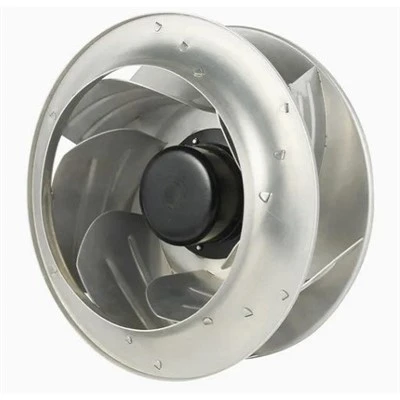
At the end of the day, the difference between a standard axial and a mixed-flow fan isn’t just a design tweak—it’s a difference in how the fan handles real-world operating conditions, not just the lab tests. As someone who’s installed, tested, and supplied these fans for over a decade, I’ve seen the numbers add up: better efficiency, lower noise, more reliable performance, and fewer headaches for facility managers. If you’re struggling with your current axial fan’s performance, whether it’s low airflow at high static pressure, too much energy use, or noise issues, I’d be happy to review your setup and walk through what a mixed-flow solution could do for your operation. Let’s connect to talk through your needs, no sales pitch pressure, just practical advice from someone who’s worked with these fans day in and day out.
Blower Fan References:
- Incropera, F.P., Dewitt, D.P., Bergman, T.L., & Lavine, A.S. (2007). Fundamentals of Heat and Mass Transfer, 6th Edition. John Wiley & Sons.
- Miller, R.W. (1996). Flow Measurement Engineering Handbook, 3rd Edition. McGraw-Hill.
- ASHRAE Handbook—HVAC Systems and Equipment. (2020). American Society of Heating, Refrigerating and Air-Conditioning Engineers.
- Moore, J., & Hill, C. (2018). Fan Performance and Selection for Industrial Ventilation. Journal of Occupational and Environmental Hygiene, 15(8), 621–629.
- Cengel, Y.A., & Cimbala, J.M. (2014). Fluid Mechanics: Fundamentals and Applications, 4th Edition. McGraw-Hill Education.
Dongguan Shengzhirong Electronics Co., Ltd.
As one of the most professional axial fan manufacturers and suppliers in China, our products have good reputation in the market. Please rest assured to wholesale high quality axial fan made in China here from our factory. Customized orders are welcome.
Address: 6/F, Building 2, No.68, Shunxing 2nd Road, Dajingtou 2nd Industrial Zone, Dalang Town, Dongguan City, Guangdong, China
E-mail: szr_coolingfan@163.com
WebSite: https://www.szrfan.com/
