Active vs. Passive Filtration Equipment: What Your Filtration Supplier Wants You to Know
When I first started in the filtration equipment business 12 years ago, I’ll admit I used to mix up “active” and “passive” terms with customers all the time. Early on, a food and beverage plant manager called me in a panic because his brewery’s filtration system kept clogging mid-shift, and he’d heard I sold “active filters” that would fix it. I showed up with a set of brochures for passive cartridge filters—only to realize we’d both been talking past each other. That mix-up taught me a key lesson: filtration isn’t one-size-fits-all, and understanding the core difference between active and passive equipment isn’t just technical jargon—it’s what keeps your operations running, your costs in line, and your products meeting specs. Today, I talk to plant engineers, maintenance leads, and operations managers every week, and the question I get most isn’t “what’s filtration?” It’s “do I need active or passive gear for my line?” Let’s break this down like I’d explain it to that brewery manager all those years ago—no overly complex formulas, just real-world context that matters for your team. Filtration Equipment

First, Let’s Define the Basics (No Stuffy Textbook Talk)
At its core, filtration is about separating unwanted contaminants from a liquid or gas stream—whether that’s yeast from beer, dust from pharmaceutical air, or sediment from municipal water. The line between active and passive comes down to one big question: does the system use external energy to drive the separation? That’s it.
Passive filtration doesn’t need extra power. It relies on physical barriers, gravity, or static pressure from the process itself to push fluid through a filter medium (think fabric, pleated polypropylene, ceramic, or mesh). It’s the equivalent of pouring coffee through a paper filter at home—your arm’s gravity, not a pump, moves the hot water through the paper to catch grounds.
Active filtration? That uses external energy—pumps, electrical fields, vacuum pressure, even centrifugal force that doesn’t come from the natural flow of your process—to enhance or control the separation. It’s like using an espresso machine’s pressure to force water through ground coffee faster, extracting flavor and filtering out fine particles in seconds.
But before you pick one over the other, let’s talk about when each makes sense, because that’s where most mistakes happen. I’ve seen a steel mill waste $20k a year on active filters when they only needed passive, and a municipal water treatment plant shut down for 3 days because they tried to save money on passive filters that couldn’t handle their load.
Passive Filtration: The Workhorse for Consistent, Low-Effort Separation
Passive equipment is the workhorse of most small to medium-scale operations. It’s reliable, simple to maintain, and doesn’t add to your energy bill. Some of the most common passive systems we supply are pleated cartridge filters, bag filters, and mesh strainers. Here’s why they shine, and when to use them.
Passive filters work best when you have a steady, low to medium flow rate, and contaminants are relatively large or consistent in size. Because they don’t use external energy, they’re low-risk: fewer moving parts means less to break down, less downtime for repairs, and easier to train your team to swap out. For example, a craft brewery with a 500-gallon-per-hour beer line? A passive bag filter with a 5-micron polypropylene medium will catch yeast and hop particles just fine, no pump needed. The pressure from the fermentation tank’s natural output is enough to push the beer through the bag.
Another big plus for passive equipment is lower upfront cost, especially for setups that don’t need to scale quickly. We just installed a set of passive strainers for a local agricultural irrigation company last month—they needed to catch dirt and sediment from well water before it goes to their crop lines. The passive mesh strainers fit straight into their existing pipe, no need to add pumps or controls. They paid for the equipment in 3 months just from not having to replace clogged sprinklers every week.
But passive filtration has limits. It struggles with high viscosity fluids (like thick syrup or heavy oil) because they don’t flow easily through a static barrier. It also doesn’t handle ultra-fine contaminants well—like nanoparticles in pharmaceutical processing or microplastics in wastewater—because those small particles can slip through gaps in the filter medium over time. And if your flow rate spikes? Passive filters can clog fast, leading to a drop in pressure and slower production, or even backups that shut down your line. I remember a car parts manufacturer who tried to use passive bag filters for their metal cutting fluid—suddenly, a batch of scrap metal debris spiked their flow, and the bags clogged so fast their line stopped for 4 hours.
Active Filtration: The Workhorse for High-Precision, High-Volume Operations
Active equipment is for when passive can’t keep up. It uses that external energy to push fluid through filter media, control flow, or even repel contaminants from the filter surface entirely. The most common active systems we sell are crossflow filters, centrifugal filters, and electrostatic precipitators (for gas streams). Let’s get real about what active does that passive can’t.
Active filtration excels at high-volume, high-precision applications. Crossflow filters, for example, use a pump to push fluid parallel to the filter surface, so only small contaminants flow through the barrier, while larger particles get swept away and filtered out continuously. That’s perfect for large breweries producing 10,000 gallons an hour—they need consistent, fine filtration without the risk of clogging mid-run. Last year, we helped a craft distillery that was using passive cartridge filters for their vodka production. They kept getting tiny sediment particles that made their product fail sensory tests. We swapped them for a crossflow active system, and their defect rate dropped from 8% to under 1%—a huge win for their brand.
Active equipment also handles ultra-fine or high-viscosity fluids. Centrifugal filters spin fluid at high speed, using force 500x stronger than gravity to separate contaminants, even from thick oil or molasses. We installed centrifugal active filters for a meat processing plant to remove fat particles from their cleaning water—something passive filters couldn’t do because the thick fat would clog the medium in hours. Now their filters run 24/7 without swapping media, cutting their labor costs by half.
But active filtration isn’t perfect. It’s more expensive upfront—you have to buy pumps, controls, and power sources—and it has more moving parts, which means more maintenance. Last quarter, a textile mill tried to save money by buying a used active filter system that was 10 years old. They didn’t budget for regular pump repairs or part replacements, and the system broke down 6 times in 2 months. We ended up helping them upgrade to a smaller, properly sized active system, but they wasted $15k on the wrong used gear. Also, active filters add to your energy costs—every pump runs on electricity, so if you have a low-volume line, the extra power can make active filters more expensive long-term than passive.
How to Choose: Ask These 5 Questions (I Use These With Every Customer)
After 12 years, I don’t just sell equipment—I help customers avoid mistakes. Here are the 5 questions I ask every plant manager to figure out which is right for them, no matter what industry you’re in.
- What’s your flow rate and process consistency? If it’s steady, low to medium volume (less than 1,000 gallons an hour) with no sudden spikes, passive works. If it’s high-volume, variable, or you have seasonal flow changes, active is better.
- What size are your contaminants? If they’re larger than 10 microns (think yeast, sediment, metal shavings), passive is fine. If you need to catch particles smaller than 5 microns, or ultra-fine debris like microplastics or nanoparticles, active will get you the consistent results you need.
- What’s the viscosity of your fluid? If it’s thick (like syrup, heavy oil, or molasses), passive will struggle to flow through the medium. Active’s pressure or centrifugal force will push thick fluids through without clogging.
- What’s your budget? Upfront and long-term. Passive has lower upfront cost and lower energy bills, but if you need to upgrade later, you’ll have to replace the whole system. Active has higher upfront cost, but it’s scalable for future growth.
- What’s your downtime tolerance? If you can afford to shut down for 1-2 hours a day to swap filter media, passive works. If you run 24/7 and can’t have downtime, active’s continuous operation is worth the extra cost.
I always tell customers: don’t chase the “newest” tech just because it’s called “active.” Last year, a small pharmaceutical startup called me asking for an active filter system, even though their line only runs 500 gallons a day. We showed them a passive pleated cartridge system that matched their specs, cost 40% less upfront, and used 75% less energy. They saved $20k in the first year.
Common Mistakes I See (And How to Avoid Them)
Over the years, I’ve seen the same mistakes time and time again. Let’s get them out of the way so you don’t make them.
First, don’t assume active is always better. I can’t tell you how many small businesses call us wanting to upgrade to active because they heard it’s “more efficient.” Last month, a local winery spent $12k on an active system when their passive bag filters were working fine. The active system added $800 a month to their electric bill, and they didn’t need the fine filtration it offered. They could’ve saved $15k over two years by sticking with passive.
Second, don’t size filters wrong. Whether active or passive, a filter that’s too small will clog fast, and one that’s too big will waste space and media. I always take time to measure your flow rate, fluid viscosity, and contaminant load before recommending anything. No guesswork.
Third, don’t forget maintenance. Passive filters need media swapped regularly—if you skip that, your filtration gets worse. Active filters need pump checks, filter cleaning, and parts replaced every few months. I offer annual maintenance checkups for all our customers, so you don’t have to worry about missing a step.
Final Thought: It’s About Your Process, Not the Equipment Name
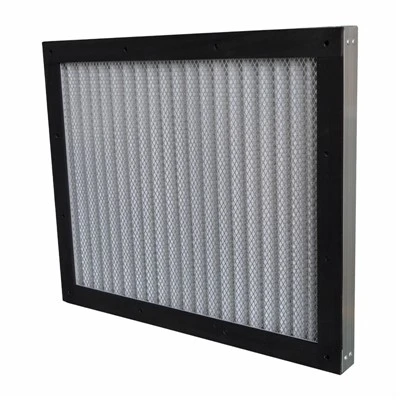
At the end of the day, active and passive filtration equipment are tools, not solutions. The best system for you is the one that fits your line, your budget, and your goals. I’ve worked with everything from small craft breweries to large-scale pharmaceutical plants, and I’ve never found a one-size-fits-all answer.
Coal Mining Filter Elements If you’re tired of filters clogging mid-shift, dealing with inconsistent product quality, or overpaying for energy you don’t need, let’s talk. I’ll walk through your process, show you what works (and what doesn’t), and give you a clear, honest recommendation—no sales pitches, no confusing jargon, just real advice based on 12 years in the filtration business. Whether you need passive bag filters for your irrigation line or a crossflow active system for your beverage production, I can help you find the right fit.
References
- Orr, C. (2010). Filtration: Principles and Practice. CRC Press.
- Cheremisinoff, N. P. (2000). Handbook of Water and Wastewater Treatment Technologies. Butterworth-Heinemann.
- Tiller, F. M. (1981). The Role of Porous Media in Filtration. Journal of the Franklin Institute.
Xinxiang Deshengwei Filtration and Purification Equipment Co., Ltd.
As one of the most experienced filtration equipment suppliers in China, we also support customized service. We warmly welcome you to buy bulk high quality filtration equipment made in China here from our factory. If you have any enquiry about cooperation, please feel free to email us.
Address: No.5 Daoqing Road, Hongqi District, Xinxiang City, Henan Province, China.
E-mail: rushufeng@dswgl.com
WebSite: https://www.dswfiltration.com/
