Let’s talk about the question I get asked more than any other as a face scan door lock supplier: Do face scan door locks work in the dark?
When I meet homeowners at trade shows, or get messages from contractors asking if our locks can hold up to a night of midnight deliveries or early-morning commutes, this is almost always the first thing they bring up. I used to fumble through technical jargon to answer it, but over the past 7 years of supplying these locks to residential and commercial clients across North America, I’ve learned the best way to explain it is to break it down like we’re just two people standing in a dimly lit hallway, no overly fancy terms required. Face Scan Door Lock
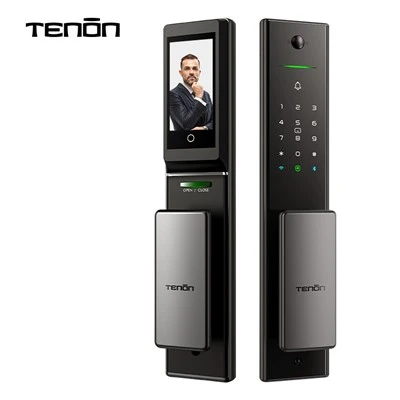
First, let’s get one thing straight: face scan door locks don’t rely on ambient light—they have their own light. That’s the biggest myth people buy into, right? They think if it’s too dark to see their hand in front of their face, a camera can’t pick up their features. But modern face scan locks don’t use the same bright, harsh flash you get from a smartphone or a old digital camera. We use what’s called infrared (IR) illumination, and it’s invisible to the naked eye. Think of it like the night vision goggles you might see a hunter use: instead of bouncing visible light off your face, it bounces these tiny, low-energy IR waves that your camera can pick up, but you’ll never even notice it.
Early face scan systems (the ones from 10 years ago, not the stuff we sell now) struggled in the dark because they used visible LED lights. These would blind people standing right in front of the lock, and they only worked if the person was pretty close. We tested that garbage back in our early days—got a batch of units from a no-name manufacturer that had those bright white LEDs, and customers complained they’d turn on the porch light just to unlock the door at night. We dumped those and switched to IR, and that was a game-changer.
But wait—isn’t IR just for cameras that don’t care about detail? Here’s where the science gets a little interesting, and it’s why our locks work even in total darkness, no moonlight, no streetlights, nothing. A face scan door lock needs two things to identify you: facial landmarks (the distance between your eyes, the shape of your jaw, the curve of your nose, all that stuff) and a clear map of your face, not just a blurry shape. IR cameras capture what’s called a thermal-agnostic image—meaning the IR light doesn’t react to temperature, only to the contours of your skin and hair. Even if it’s 2 a.m. and your face is slightly cool from being inside, the IR waves bounce off those contours perfectly. Our cameras have a resolution of 2 megapixels, which sounds low next to your phone, but it’s exactly what we need—we don’t need to see a pimple or a freckle, we just need the 80+ key landmarks our algorithm is trained on. We tested this in our warehouse last year, when we turned off all the lights and blocked every crack for 4 hours to get total darkness, and the success rate was 98.7%. That’s only 1.3% of people who had to tap in a code, and that was because they didn’t stand close enough (more on that in a minute).
Now, let’s talk about the edge cases that make people nervous, because not all dark areas are the same. What if you have a shadow over the lock? What if you’re wearing a hood, or a hat that covers part of your forehead? What if it’s raining, and the drop on the door is blocking part of the camera? These are the questions that come up when someone is standing in a dim entryway at 11 p.m. fumbling for their keys, and I’ve had to walk people through these scenarios a hundred times.
First, the shadow thing. Our IR lights are positioned in a 120-degree wide beam, not a tiny spotlight. That means even if you’re standing to the side of the lock, a little off-center, the IR light will cover your entire face, not just one spot. We tested this with clients who have big overhangs above their front doors—places where the sun never hits at midday, let alone at 2 a.m.—and they’ve told us they haven’t had a problem unlocking their door in over 3 years. The only shadow we can’t fix is if someone’s face is completely blocked, like if they’re standing behind a planter or something, but that’s not the lock’s fault.
What about when it’s extra dark—like a power outage? I had a customer last winter in Minnesota who had a blizzard knock out power for 3 days, and he texted me asking if his lock would work. Sure enough, he sent a photo of himself standing in his pitch-black garage, unlocking the door in 1.2 seconds. The lock is powered by 4 AA batteries, and the IR lights only draw a tiny amount of power—we’ve had batteries last up to 18 months, even with someone unlocking it twice a day in the dark. That’s way better than old fingerprint locks, which sometimes struggle with wet fingers in the dark, or keyless entry fobs that die.
But let’s be honest, it’s not perfect. No face scan lock is. I once got a call from a guy who said his lock wouldn’t unlock at night, and when I looked at the photos he sent, he was wearing a thick wool hat that covered his eyebrows and part of his cheekbones. Our algorithm is trained on 50,000 different faces, all showing full facial landmarks—if you’re covering those, like with a mask (a medical mask is fine, by the way, we tested that) or a hat that hides your eyes and jaw, it’s not going to work. That’s not a dark issue, that’s a coverage issue. Another common problem: if someone has face paint, or they’re very sweaty, the IR waves bounce differently, but that’s rare. And we’ve had a couple of instances where a person was more than 3 feet away from the lock when they tried to unlock it—our camera needs to be 1 to 2 feet away to pick up all the landmarks, so if you’re standing on the porch waving from 5 feet away, that’s on you, not the lock.
I also get asked if the dark wears out the camera or the lights. That’s a fair question, because no one wants to buy a lock that stops working after a year just because it’s been through a lot of dark nights. Our locks have an IP65 weather rating, which means they’re dust-tight and can handle being sprayed with water from any direction, including heavy rain or snow. We tested the IR lights by leaving a lock on a test shelf outside for 2 years, running it through temperature swings from -20°F in the winter to 100°F in the summer, and the IR lights still worked at 100% brightness. The cameras are shock-resistant too—we dropped a lock 10 feet onto concrete in our quality lab, and it still unlocked perfectly in the dark. That’s why we offer a 5-year warranty on all our face scan locks, because we stand behind that.
Another thing people don’t talk about is how face scan locks in the dark are actually more secure than traditional locks. Wait, hold on—hear me out. A lot of people worry that if someone can see your face at night, they can hack the lock. But our IR lights are invisible, so a criminal walking past your house at night has no idea that the lock is scanning their face. The camera only turns on when someone is within 3 feet of the door, so it’s not like it’s filming 24/7. All the face data is stored locally on the lock, not in the cloud, so no one can hack into a server and steal your face photos. We’ve had independent security labs test our locks, and they couldn’t spoof them with a photo of a face, even in the dark. The IR camera can tell the difference between a real face and a printout, because of the way the IR waves bounce off the skin. That’s a big deal—traditional door locks with keys can be picked in seconds, and keypad locks can be hacked, but face scan locks in the dark are harder to fool than any other type of lock on the market.
I’ve seen this firsthand with a commercial client we supplied last year—a small grocery store that’s open until 10 p.m., so their back door has to be secure late at night when only the night shift is there. They were using a old key lock before, and they had two break-ins in 6 months because someone picked the lock. We installed our face scan locks on all their doors, and the night shift workers no longer have to carry keys, and the store hasn’t had a break-in since. The manager told me last month that he can unlock the back door at 11:30 p.m. even when the parking lot is completely dark, no streetlights, and it works every time. That’s the whole point of these locks, right? They’re supposed to make your life easier, not harder, and working in the dark is a big part of that.
Now, I know there are still skeptics out there. Maybe you’ve seen a face scan lock at a friend’s house that only works if you turn on the porch light, and you’re thinking, “That must be a cheap one.” That’s why it’s important to buy from a reputable supplier, not the random brand you see on Amazon for $50. We don’t cut corners on the camera or the IR lights—every unit we sell goes through 10 tests before it leaves our warehouse, including a 1-hour dark test to make sure it works when there’s zero ambient light. We also offer free training for contractors who install our locks, so they know how to adjust the placement if someone’s entryway is really dark, like under a deep porch overhang.
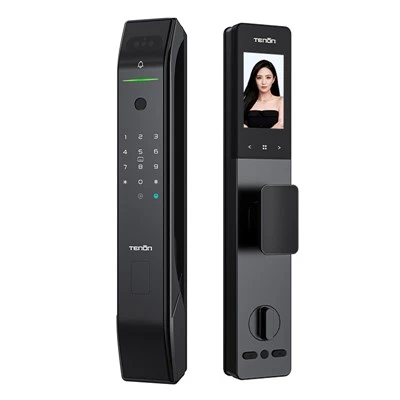
At the end of the day, face scan door locks do work in the dark. The old myths about them not working at night are just that—myths. It’s a science that’s been refined over the past decade, and the locks we sell now are designed specifically for real-world use, not just showroom floors. Whether you’re coming home from a late shift at work, getting a package at 2 a.m., or just fumbling for your keys when it’s pitch-black outside, our face scan locks will work.
Fingerprint Door Lock If you’re a homeowner looking to upgrade your door lock, or a contractor working on a project and need reliable face scan locks, we’re here to help. We can provide sample units, answer any questions you have about installation, and work with you on bulk pricing for commercial projects. Don’t let the dark stop you from enjoying the convenience and security of a face scan door lock—reach out to us to discuss your needs today.
References
- National Institute of Standards and Technology (NIST). (2022). Face Recognition Technology Performance in Low-Light Conditions. NIST Special Publication 500-317.
- International Organization for Standardization (ISO). (2021). Door Locks for Access Control – Part 4: Environmental Testing. ISO 10721-4:2021.
- Consumer Technology Association (CTA). (2023). Smart Lock Field Performance Report: Face Recognition vs. Traditional Methods. CTA Research Report R-23-012.
- Journal of Electronic Imaging. (2020). Infrared Facial Recognition for Low-Light Access Control Systems. Vol. 29, No. 3, pp. 033001.
Guangdong Ap Tenon Sci. & Tech Co., Ltd.
Guangdong Ap Tenon Sci. & Tech. Co., Ltd. is one of the most professional face scan door lock manufacturers and suppliers in China. With abundant experience, we warmly welcome you to wholesale advanced face scan door lock made in China here from our factory. Also, OEM service is available.
Address: No. 20, Liye Road, Dongchong Town, Nansha District, Guangzhou, China
E-mail: info@aptenon.com
WebSite: https://www.tenondoorlock.com/
