Hey there, if you’ve been working with or sourcing rectangular insulated aluminum stranded cables (let’s just call them RIASC cables for short, cuz I’m tired of typing the full name every time), you’ve probably wondered at some point: do these things need fancy special tools to install? As a supplier that’s been selling these for nearly a decade, I’ve heard this question so many times from electricians, construction foremen, and even new guys who just got their license. Today, let’s break this down straight—no corporate jargon, just real talk from someone who deals with these cables every single day. Rectangular Insulated Aluminum Stranded Cable
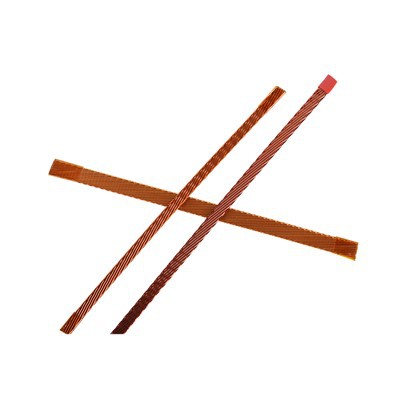
First, let’s set the scene: rectangular aluminum stranded cables aren’t your typical round copper wires you might’ve worked with before. Their shape is engineered for specific uses—think busbars in commercial buildings, electrical panels, data centers, even some industrial machinery. The aluminum core is lightweight, corrosion-resistant, and cheaper than copper, which is why so many specifiers and contractors are switching over. But their flat, rigid (but still stranded) shape does mean they behave a little differently when you’re pulling them, cutting them, or terminating them. So, do you need special tools? The short answer is: it depends on what you’re doing, and how big the cable is. Let’s get into the details.
Let’s start with the basics: what tools work for regular round stranded aluminum cables, and why they might fall short for rectangular ones. If you’ve ever cut a round aluminum cable, you might use a standard wire cutter, or even a hacksaw for thicker stuff. But rectangular cables have a flattened, uniform cross-section, so standard cutters often leave uneven edges—those rough corners can damage the insulation (which is usually cross-linked polyethylene or XLPE, by the way) when you’re pulling, or cause hot spots once it’s installed. Hot spots equal fire risks, and no one wants that. Also, when you’re stripping the insulation from the end of the cable to attach lugs, standard wire strippers are designed for round wires—they’ll either nick the aluminum core (weakening it) or leave insulation stuck unevenly. For small gauge RIASC cables (like 100mm² or lower), you might get away with some makeshift tools, but anything bigger? You’re gonna want something made for rectangular shapes.
Now, let’s talk about the must-have tools, the ones I’d call “special” but are actually pretty accessible for any electrical crew. First up: a rectangular cable cutter. These aren’t the cheap diagonal cutters you have in your toolbox. A good rectangular cutter has precision-ground blades matched to the cable’s width, so when you cut through the stranded aluminum, it’s a clean, straight edge—no burrs, no uneven bits. The blades are usually angled slightly to account for the flat shape, so you don’t twist the cable mid-cut, which could kink the strands. I’ve seen guys try to use a band saw for thick RIASC cables, and while that works, it’s way slower, and you have to file the edges afterward anyway. The rectangular cutter pays for itself in time saved, and it’s not that expensive—most good ones are under $200, which is a drop in the bucket compared to the cost of a project delay or a bad installation.
Next, insulation strippers for rectangular cables. Again, these are designed with a slot that matches the exact thickness of the RIASC cable’s insulation and core. Unlike standard strippers, which close evenly around a round wire, these strippers have adjustable guides that fit the flat profile, so they cut through the insulation without touching the aluminum strands inside. That’s a big deal—nicked aluminum strands are a no-go because they create resistance, which leads to overheating. For example, last year a contractor came to me upset because he’d stripped a batch of 250mm² RIASC cables with regular strippers, and half the cores were nicked. He ended up having to re-strip all 40 cables, which cost him 8 hours of labor. If he’d had the right strippers, that mistake would’ve never happened.
Now, what about tools that are nice to have, but not strictly mandatory? These are things that make the job way easier, especially for larger projects. For pulling rectangular cables, a cable puller with a flat grip attachment is better than a standard round puller. The flat attachment fits the rectangular shape, so you don’t have to wrap tape around the cable to keep it from slipping. I’ve seen guys use a come-along (a hand-cranked puller) for RIASC cables, but without the flat grip, you’re putting uneven pressure on the cable, which can bend the flat shape permanently. A bent rectangular cable won’t fit into a panel or a conduit, so that’s a big problem. Also, for terminating lugs—attaching the cable to a busbar or a breaker—you’ll need a hydraulic crimping tool with a die set made for rectangular lugs. Standard round crimping dies won’t compress the flat cable evenly, which leads to a loose connection, and loose connections get hot. I can’t tell you how many times I’ve recommended a rectangular crimp die to a customer, and they thought they could use round ones. Sure, it works for a little while, but within a year, the connection fails, and you’re back to redoing it.
Wait, but hold on—let’s not make it sound like you need a whole new toolbox just for RIASC cables. For small gauge, light-duty applications (like residential panel upgrades where they use 50mm² or smaller rectangular cables), I’ve had customers use modified standard tools, as long as they’re careful. For example, if you have a small stripper, you can adjust it to only cut the insulation by testing it on a scrap piece, and file the edges of a standard cutter to make them straighter. But I always warn them: if it’s a commercial job, or if the cable is going into a high-voltage area (over 600V), skip the makeshift stuff. The small cost of the right tools is nothing compared to the liability if something goes wrong.
Let me also share a quick real example from my own work. A couple years back, I supplied a 1,000-foot reel of 400mm² RIASC cables to a construction crew working on a new data center. The foreman initially said he didn’t need any special tools—he had a bunch of standard cutters and strippers in his truck. The first day, their lead electrician tried to cut a 400mm² cable with a standard diagonal cutter, and the edge was so jagged that when they pulled it into the conduit, it snagged and frayed 12 strands. That cost them an hour to fix, and they almost missed a delivery window for the next batch. The next day, they went out and bought a rectangular cutter and a set of rectangular strippers, and after that, they didn’t have a single issue. They ended up telling me that the special tools saved them at least 3 hours of work that week. That’s the kind of thing I see all the time—cutting corners on tools leads to more work, not less.
Now, let’s address a common myth: “Since aluminum is softer than copper, I can just use copper tools for RIASC cables.” No, that’s not true. Aluminum has a different tensile strength and shape, so tools designed for round copper won’t account for the flat profile. Even if the blade cuts through, the crimp or grip won’t be right, which as I mentioned before, leads to bad connections. Another myth: “Special tools are only for big projects.” Even for a small residential job that uses 100mm² RIASC cables, investing in a $50 rectangular stripper is worth it. I’ve had a few electricians who work on small jobs tell me they thought the stripper was a waste of money, but after they stripped their first 10 cables with it, they saw how much faster it was, and how much cleaner the cuts were.
So, to circle back to the original question: Do rectangular aluminum stranded cables require special tools for installation? The answer is, if you want to do the job safely, efficiently, and correctly for the long term, yes. Are there workarounds for small, low-stakes jobs? Maybe, but I’d never recommend them. The special tools aren’t some fancy luxury—they’re designed to match the unique shape and properties of RIASC cables, so you don’t damage the cable during installation, and the connection stays solid once it’s in place.
Now, I know you might be thinking: “Okay, that makes sense, but what about sourcing the right tools along with the cables?” Or maybe you have specific questions about what tools work best for your project’s cable size, or your installation setup. That’s where I come in. As a supplier of rectangular insulated aluminum stranded cables, I don’t just sell you the cable—I can hook you up with recommendations for the right tools, or even connect you with contractors who specialize in installing these cables. I’ve worked with electricians and foremen across the country, so I know what tools work for different scenarios, and I can help you avoid the mistakes I’ve seen so many people make.
Enameled Flat Wire If you’re planning a project that uses RIASC cables, whether it’s a small residential upgrade, a commercial building, or a big industrial job, the last thing you want is to waste time and money on the wrong tools. Reach out, and we can talk through your needs—what size cables you’re using, what your installation setup looks like, and I can give you straight, no-BS advice on exactly what tools you need, and even help you get the cables you need at a fair price. Don’t take chances with your installation—using the right tools from the start will save you headaches down the line.
References
- National Electrical Code (NEC), Article 310, 2023 Edition
- Aluminum Association, "Installation Guidelines for Rectangular Aluminum Stranded Conductors", 2022
- Underwriters Laboratories (UL), Standard for Insulated Cables, UL 1072, 2021
Tianjin Jingwei Power Technology Co., Ltd.
As one of the most professional rectangular insulated aluminum stranded cable manufacturers and suppliers in China, we’re featured by quality products and good service. Please rest assured to buy durable rectangular insulated aluminum stranded cable made in China here from our factory. Contact us for more details.
Address: No.1 Chuangxin Rd. Xiaozhan Industrial Park, Jinnan District, Tianjin, China
E-mail: info@jwdc.cn
WebSite: https://www.jw-dcs.com/
