Let’s talk about something that every driver and independent mechanic has probably debated at some point: when your steering gear starts acting up—whether it’s leaking fluid, feeling loose, or making weird groaning turns—should you rebuild it or just replace it entirely? Full disclosure: I’m in the steering gear game, so you might think I’d push one side over the other. But honestly? I’ve seen way too many botched rebuilds and wasted cash on unnecessary replacements to pick a “one size fits all” answer. Let’s break this down like we’re shooting the breeze in a parts shop after a long day. Car Steering Gear

First, let’s get real about what steering gear actually does, because this isn’t some random car part that’s easy to ignore. The steering gear is the middleman between your steering wheel and the front wheels—turn that tiny wheel, and it translates that motion into big moves that keep you from drifting into the other lane or struggling to parallel park in the rain. I can’t count how many times a customer has brought in their ride saying, “My steering feels ‘off’” and turns out it’s a gear that’s 15 years old with 200k miles on it. That’s not a “minor annoyance”—that’s a safety thing, plain and simple.
Now, let’s get to the main event: rebuild vs replace. Let’s start with rebuilding, because that’s what a lot of folks default to when they’re trying to save a buck. What’s a steering gear rebuild anyway? It’s when you take the old gear out, tear it apart, swap out worn parts like seals, bearings, the pitman shaft seal, maybe a new rack piston or valve spool if they’re too chewed up, and put it back together with all new gaskets. Sounds good on paper, right? Cheaper than a new part, keeps the original “character” of the car (especially if it’s a classic that’s hard to find parts for). But here’s the catch I see every week most of the time, you don’t see what’s going on inside that old gear until you tear it down. I’ve had customers bring in a gear for rebuild that looked fine on the outside, and when we pop it open, the valve spool is scored so bad it’s like a cheese grater, or the inner bearings have rust from years of sitting in a damp garage. Suddenly, that $200 rebuild quote jumps to $500 because we have to source a part that’s NLA—“no longer available”—from the OEM. And don’t get me started on the quality of “budget rebuild kits” you can find on Amazon or eBay. Half the time, the seals are the wrong durometer, or the bearings are stamped steel instead of machined, so six months later that gear is leaking again and the customer’s back, mad that they wasted their money.
That said, rebuilding isn’t always a bad call. Let’s say it’s a relatively new car—like a 2015 Toyota Camry that’s only got 80k miles on it, and the only problem is a minor power steering fluid leak and a little play in the gear. The original gear isn’t corroded inside, the valve spool is still smooth, so a full rebuild with OEM-spec parts will work great. I’ve seen those last 100k+ miles no problem. And if you’re working on a classic car—say a 1967 Mustang that you’re restoring to keep in the family—rebuilding the original steering gear is non-negotiable, because you can’t just run out and buy a brand-new OEM unit that’s authentic. For those cases, a good, experienced rebuild shop that uses high-quality parts is the way to go.
Now, replacing the steering gear. When I say replace, I don’t mean that random $150 Chinese knockoff you can get on a big online marketplace. I’m talking about either a genuine OEM replacement, a remanufactured steering gear from a reputable supplier, or if it’s a newer car, a new OE part. Let’s get the cost out of the way first: a good reman unit is usually $400-$800, which is more than a budget rebuild, but way less than a brand-new OE unit from the dealer, which can run you $1,200 or more. But here’s the big upside: when you get a proper reman steering gear, it’s not just the old gear torn down and put back together with cheap parts. We (and other good suppliers) tear every core down completely, clean every single component, replace all the worn parts with new, high-quality ones, test every seal and valve, and put it through a full functional test on a bench before it leaves the shop. No surprises when you get it—you know it’s going to work, and it’s covered by a warranty, usually 1 or 2 years, which is way more than a random rebuild from a back-alley shop.
When is replacing the better call? Let’s run through the scenarios. First, if your old steering gear is badly damaged—like it’s been leaking so long that the fluid corroded the internal parts, or it’s been in an accident and the housing is bent. I’ve seen gears that were hit so hard the rack piston was twisted, and there’s no way to fix that with a rebuild. Second, if you’ve already tried rebuilding it once and it failed—like that customer who spent $300 on a rebuild, drove it for 3 months, and now it’s worse than before. I always tell people: if a rebuild already came back, that gear is toast, just replace it. Third, if it’s a modern car with electronic power steering (EPS) instead of hydraulic. Wait, hold on—plenty of people don’t know this, but newer cars use EPS gears, not the old hydraulic ones. Rebuilding an EPS gear is way more complicated because it has a motor and a torque sensor that are calibrated specifically for your car’s VIN. Most independent mechanics don’t have the tools to do that right, so a bad EPS rebuild will make your steering feel off, or even trigger a check engine light that you can’t turn off. For EPS units, 9 times out of 10, replacement is the smarter move.
I should also mention something that a lot of folks don’t think about: labor. Wait, you might say, that’s not part of the part cost—but it is, because both rebuild and replacement take time. A bad rebuild that fails means you pay for the rebuild, pay for labor to take it out and put it back in, then pay again for a new part and labor. That’s double the cost, easy. A proper reman unit might cost a bit more upfront, but you only pay to take the old one out and put the new one in, and it’s done right the first time. I’ve had customers come to me after a bad rebuild, and when we price out a replacement, they realize they would have saved $500+ just by going with replacement the first time.
But let’s not act like replacement is perfect either. The knock on replacement is usually “it’s not original” or “it costs too much.” And yeah, if you’re a purist with a 1955 Chevy Bel Air, a reman unit with modern power steering might not feel like the original, so a rebuild is the only way to keep that vintage feel. Or if you’re working on a super rare car where the core for a reman unit is impossible to find, rebuilding is your only option.
Wait, let’s talk about some real examples from my shop, because numbers and stories make this real. Last month, a guy brought in a 2018 Honda Civic with 95k miles—steering was heavy, leaking fluid, and had play. We checked with his mechanic: they quoted him $280 for a rebuild, $650 for a reman replacement. I told him, let’s peek at the old gear first. We tore it down, and the valve spool was scored bad from old fluid that was never changed—so the rebuild would actually be $450, because we had to source a new spool. So suddenly, replacement was only $200 more, and came with a 2-year warranty vs. a 90-day warranty on the rebuild. He went with replacement, and a week later his mechanic sent us a message saying it worked perfect and the customer was happy. Another example: a guy with a 1962 Corvette—original steering gear, leaks a little but works fine. He didn’t care about saving cash, he wanted the original feel, so we did a full rebuild with NOS (new old stock) seals and bearings, and it’s been working great for a year now, no issues.
Let’s also cover some myths I hear all the time. Myth #1: Rebuilding is always cheaper. No, like that Civic example, sometimes the hidden costs of a bad or partial rebuild make it more expensive. Myth #2: Replacement lasts longer. If you get a quality rebuild from a good shop, it can last just as long as a reman unit—if the parts are good. The problem is, most people don’t know how to vet a rebuild shop. Myth #3: All reman units are the same. Nope—you get what you pay for. Some cheap reman shops just do a quick tear-down, swap a few seals, and call it good. The good ones bench test every single unit, replace all critical components, and stand behind their work.
So what’s the takeaway here? How do you decide? Let’s make a quick checklist to run through, because I know people hate guesswork. First, what kind of steering gear do you have? Hydraulic or electronic (EPS)? If it’s EPS, lean toward replacement unless it’s a very old classic where a specialist can rebuild it correctly. Second, what’s the condition of the old gear? If it’s leaking heavily, corroded, scored internally, or already failed a rebuild, replace it. If it’s only got minor play or a small leak, and it’s not too old or high-mileage, a good rebuild works. Third, what’s the car’s value and purpose? If it’s a daily driver you plan to keep for another 5-10 years, splurge on a quality reman unit—you won’t regret it. If it’s a cheap beater you’re planning to sell in a year, a budget rebuild might be okay, but just know the risk. If it’s a classic or collectible, rebuild the original to keep its authenticity.
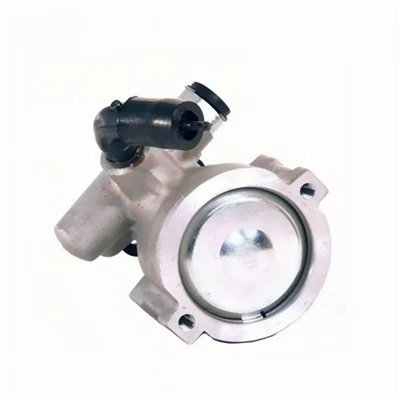
At the end of the day, I’m in the steering gear business, so I want you to make the call that’s right for you and your car, not just push one product over another. I’ve seen too many people get burned by cheap rebuilds, and too many people overpay for dealer replacements when a quality reman would have worked just as well. If you’re not sure what to do, bring your car to a trusted mechanic, and if you’re not happy with their advice, hit me up—we can help you figure out what gear you need, whether it’s rebuilt or remanufactured, and make sure you don’t waste your money.
Automotive Steering System References:
- Automotive Steering Systems: Fundamentals, Diagnosis, and Repair, SAE International, 2021
- “Steering Gear Replacement vs. Rebuild: A Cost-Benefit Analysis,” National Institute for Automotive Service Excellence (ASE), 2022
- Electric Power Steering (EPS) System Design and Maintenance, Society of Automotive Engineers (SAE), 2020
- “Core Quality Assessment for Remanufactured Automotive Components,” Remanufacturing Industries Council, 2023
Shanghai Changshun Imp.&Exp. Co., Ltd.
As one of the most professional car steering gear manufacturers and suppliers in China, we are committed to providing high quality OEM service to global clients. We warmly welcome you to buy premium car steering gear made in China here from our factory.
Address: No.1558, Bai’an Road, Anting Town, Jiading District, Shanghai
E-mail: info@changhui-group.com
WebSite: https://www.changhuish.com/
