If you’ve ever stood in a factory floor watching motors, transformers, or even those tiny coils in your phone charger buzz to life, you might’ve missed a tiny hero making all that happen: enameled flat wire. But let’s talk about a specific version I sell that’s been blowing up lately—self-bonding enameled flat wire. If you’re used to regular enameled wire, this stuff is a game changer, and I see customers switching to it nonstop for good reason. As a supplier, I get to hear exactly what engineers and production teams hate about old options, and how self-bonding fixes all those headaches. Let’s break down the real, practical advantages, not just some marketing fluff. Enameled Flat Wire
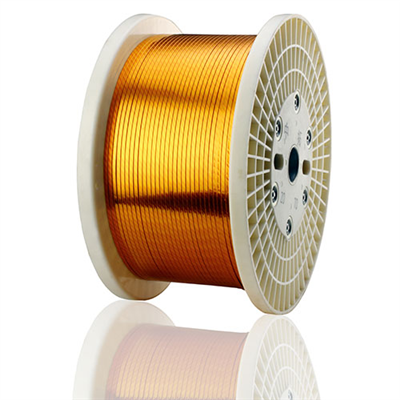
First, let’s get one thing straight: self-bonding enameled flat wire isn’t that different from regular enameled wire at its core. It’s a copper or aluminum wire wrapped in a thin, tough insulation layer (that’s the enamel part) designed to keep electricity from leaking out where it shouldn’t. The extra step here is that the insulation has a special resin baked into it—one that melts and fuses when you apply a little heat or pressure. No extra glue, no messy adhesives, just the wire itself sticking to other wires or surfaces when you need it to. That might sound minor, but if you’ve ever tried winding coils by hand or machine, you know how much of a pain loose turns are.
Take a small brushless motor, for example. If you wind a regular flat wire into a stator, every single loop has to be held in place with tape or string or a separate adhesive after winding. That’s extra parts, extra time, and way more room for error. I’ve had a customer tell me they used to spend 15 minutes per stator just taping down the coil ends. With self-bonding? They wind it, hit it with a heat gun for 10 seconds, and the whole coil locks tight. No taping, no string, no chance a loose spot will cause a short mid-production. That’s the first big win: simplified assembly and way less downtime from mistakes.
But it’s not just about cutting steps. The insulation is thinner on self-bonding wire, too? Wait, let me confirm that—yes, the bonding layer is formulated to be part of the enamel, so you don’t have to add an extra adhesive coating that takes up space. So the coil can be more compact. For devices like drone motors or medical device coils that have to fit in tiny spaces, that’s huge. I had a client making hearing aid coils switch to this stuff and tell me they shrank their coil size by 20% without losing any power. That’s not just convenience—that’s making a product smaller, lighter, and better for the end user.
Another advantage that doesn’t get talked about enough is mechanical stability. Regular enameled coils rely on external materials (tape, adhesives, even varnish) to hold everything together. Those materials can degrade over time, especially if the device gets hot, or vibrates, or is exposed to humidity. A motor in a power tool, for example, shakes a lot—over months, tape can slip, adhesives can crack, and suddenly the coil is rubbing against the core, causing shorts and premature failure. Self-bonding wire’s bond is part of the insulation, so it’s way more resistant to heat, vibration, and moisture. A customer in the industrial machinery space switched last year, and in their 6-month durability tests, the self-bonding coils had zero failures, while the old regular ones had a 7% failure rate. That translates to less warranty work, happier end customers, way lower costs in the long run.
Wait, let’s make this relatable. Imagine you’re winding a transformer for a solar inverter. Those inverters run 24/7, get really hot, and are exposed to outdoor elements. If you use regular wire, you have to apply a varnish after winding, which adds a curing step (usually oven time) that takes hours. With self-bonding, you can cure the bond right on the production line, no extra oven needed. The wire’s insulation is also formulated to handle those high temperatures—most self-bonding wires are rated for 155°C or higher, some even 180°C. That’s way more than standard enamel, which starts to break down if it gets too hot. So your inverter runs longer, no overheating issues.
What about customization? As a supplier, I love that self-bonding enameled flat wire is super flexible for different applications. You can get it in different metals—copper for conductivity, aluminum for lighter weight (great for aerospace or portable devices). It comes in different widths and thicknesses, so you can tailor it for tiny phone coils up to big motor stators. And the bonding process is adjustable, too—some grades melt at lower heat for delicate electronics, others need higher heat for industrial parts that see more stress. That means it works for every customer, not just one type of project.
I know what you’re thinking: “This sounds too good, is there a downside?” Let’s be real—nothing is perfect. The main thing I tell customers is that you have to make sure your curing process is set up right. If you don’t apply enough heat or pressure, the bond won’t hold. But that’s way easier than fixing all the issues with regular wire. Plus, once you get the process down, it’s consistent every single time. I’ve even had customers tell me they switched from round enameled wire to flat self-bonding and saved on material costs—flat wire fills space more efficiently, so you can get more conductivity in a smaller area, meaning you use less metal overall. That’s a win for their budget and for waste, too.
Let me throw in a personal story to make this real. A few months back, a guy from a small robotics startup hit me up. He’d been using regular enameled wire for their robotic arm coils, and their production line was slow because every coil needed to be post-wound glued and cured. They were also having issues with coils coming loose during shipping, so they had to reinforce every unit with extra packaging. He tried a sample of self-bonding wire I sent him, and said his assembly time per coil dropped by 70%. No more gluing, no extra packaging for the coils. Their end product was also 10% lighter, which made the robot arm more efficient. He placed a 10,000-unit order that day, and has been a repeat customer ever since. That’s the stuff that makes this job worth it—seeing a small business fix a big problem with a simple switch.
Now, let’s talk about long-term performance, because that’s where self-bonding really stands out. I mentioned vibration earlier, but what about thermal cycling? Devices that turn on and off a lot—like refrigerators, laptops, or electric cars—go through constant heating and cooling. Regular adhesives can expand and contract differently than the wire or core, leading to tiny gaps that build up over time. That can cause electrical resistance to go up, or even shorts. The bond from self-bonding wire is part of the insulation, so it expands and contracts at almost the same rate as the metal wire. No gaps, no resistance buildup, way longer lifespan. I have a client in the electric vehicle space that uses this wire for their on-board chargers; they told me the test units ran 30% longer than the old ones with regular wire. That’s a huge selling point for their product, and it all comes down to that self-bonding feature.
Another underrated perk: cleaner production lines. When you use external adhesives or glues, there’s always mess. Glue drips on workbenches, adhesive residue gets on coils, you have to clean equipment way more often. Self-bonding wire is a clean process—no messy chemicals, no fumes, no cleanup. That’s better for your workers, too, less exposure to harsh chemicals. I’ve had production managers tell me their line downtime for cleaning dropped by half after switching. It’s a small thing, but small adds up to big savings over time.
Wait, let’s make sure I’m not overselling. It’s not that regular enameled wire is obsolete. There are definitely applications where regular works better—like small, low-coil-count projects where cost is the only factor, and assembly time isn’t a big deal. But for anything where you’re winding multiple tight coils, need durability, or want to shrink your product, self-bonding is the way to go.
At the end of the day, I sell more than just wire. I sell solutions to the headaches I hear about every day from customers: slow assembly, high failure rates, bulky parts, messy production. Self-bonding enameled flat wire solves most of those headaches in one go. It’s more consistent, more durable, more efficient, and saves money in the long run. If you’re someone who’s dealing with coil winding, motor builds, transformer assemblies, or any product that uses electrical coils, this is worth a close look.
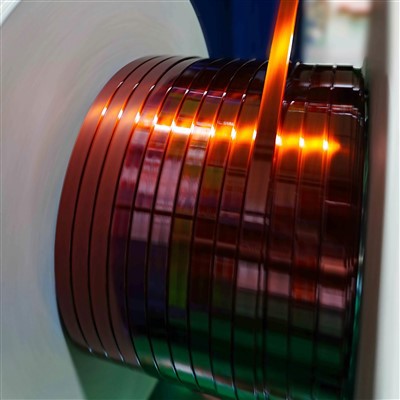
If you’re curious to see how it works, or want to ask about samples, custom sizes, or grades for your specific application, hit me up. I can walk you through how other customers have implemented it, send you test results, or just answer any question you have. No sales pitch, just real talk from someone who’s been in this industry for years and works with engineers and production teams every day to find what actually works.
Enameled Flat Wire References
- Enameled Wire Manufacturers Association. (2022). Self-Bonding Insulation Technology: Properties and Industrial Applications.
- Journal of Electrical Insulation and Protection. (2021). Mechanical Durability of Bonded vs. Non-Bonded Wires in High-Vibration Electrical Components.
- International Electrotechnical Commission (IEC). (2020). Standard for Self-Bonding Enameled Wire Ratings and Performance.
Tianjin Jingwei Power Technology Co., Ltd.
As one of the most professional enameled flat wire manufacturers and suppliers in China, we’re featured by quality products and good service. Please rest assured to buy durable enameled flat wire made in China here from our factory. Contact us for more details.
Address: No.1 Chuangxin Rd. Xiaozhan Industrial Park, Jinnan District, Tianjin, China
E-mail: info@jwdc.cn
WebSite: https://www.jw-dcs.com/
